
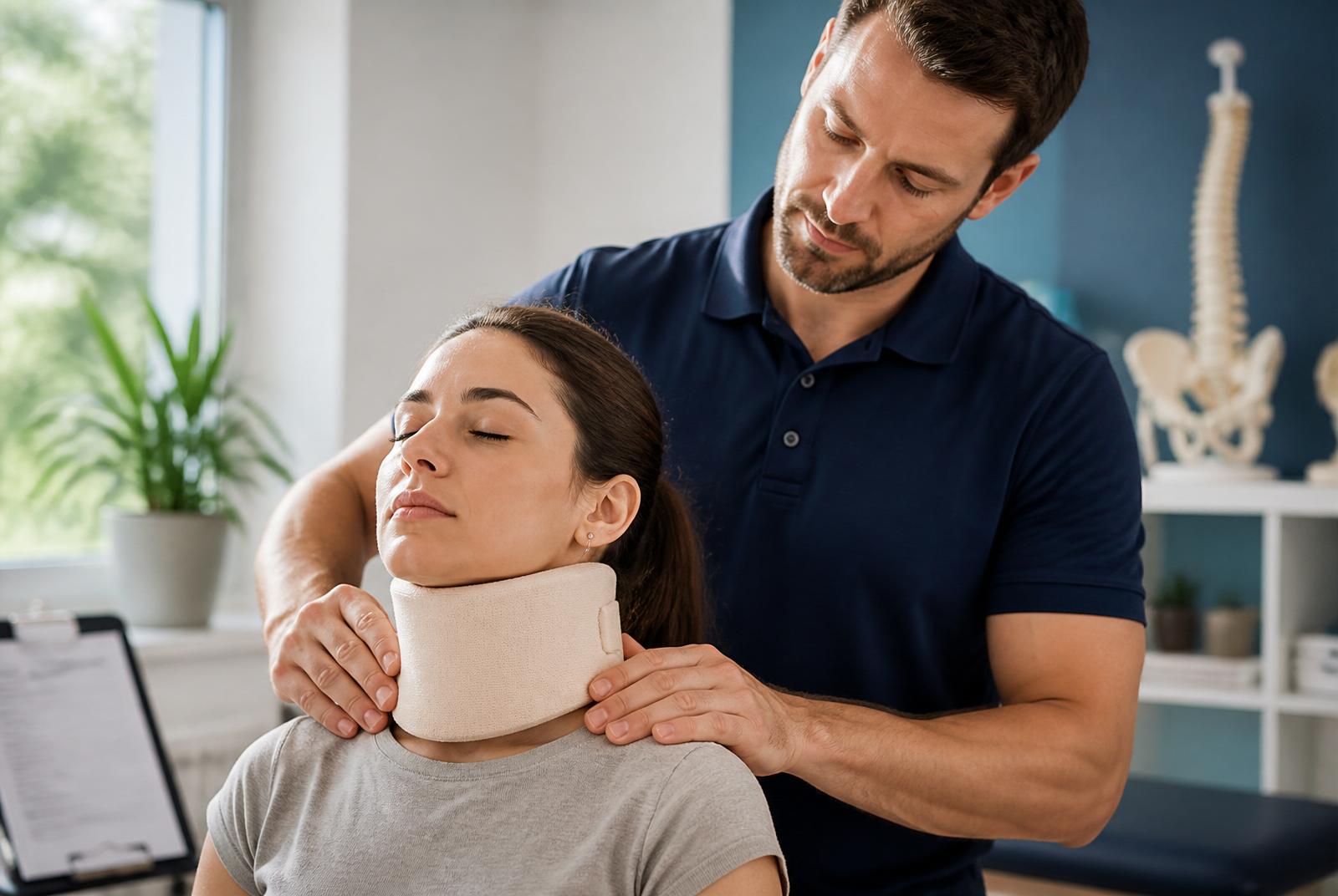
After a Collision in or Near Falls Church
Whiplash and other soft-tissue injuries frequently present between twenty-four and seventy-two hours after a crash, long after emergency room staff have cleared you for discharge. Drivers involved in rear-end collisions on I-66, sudden stops along Route 7, side-impact events on the Capital Beltway, or fender-benders on Leesburg Pike should be evaluated within the first week. Even a low-speed crash transfers substantial force through the spine, and the resulting injuries respond far better when addressed early.
Whiplash and cervical strain
Whiplash remains the most common finding in our post-collision patients throughout Falls Church, Vienna, and Arlington. Rapid acceleration and deceleration of the head produces stretching and tearing of ligament and soft tissue in the neck. Our evaluation covers cervical range-of-motion measurement, dermatomal and myotomal testing, and provocative orthopedic maneuvers. Treatment is graduated: soft-tissue therapy, gentle mobilization, cervical traction as tolerated, and later rehabilitative exercise to restore the deep cervical flexor endurance that impact injury compromises.
Typical symptoms include:
- Stiffness and restricted rotation
- Occipital headache
- Referred pain into the shoulders and upper back
- Delayed onset (often twenty-four to seventy-two hours)
Herniated and bulging discs from impact
Higher-force collisions and injuries involving direct axial loading of the spine can produce disc herniation at the cervical, thoracic, or lumbar levels. We conduct careful neurological screening at the initial visit, and when disc involvement is suspected, coordinate MRI imaging through local Falls Church and Tysons imaging centers. Conservative care includes flexion-distraction technique, controlled traction, therapeutic exercise, and modalities such as low-level laser therapy or shockwave when appropriate. Surgical referral is arranged only when conservative measures fail, or when frank neurological deficit dictates immediate intervention.
Warning signs include:
- Radicular pain into an arm or leg
- Tingling or numbness in a specific nerve distribution
- Weakness in the affected muscle groups
Mid-back and low-back injury
Thoracic and lumbar injuries are often overlooked in the first days after a crash because cervical symptoms dominate. Our protocol includes spinal-level palpation, orthopedic testing of the sacroiliac joints and lumbar segments, and, when warranted, on-site imaging or referral for MRI. Rib and sternal contusion from seatbelt loading is evaluated and documented, since insurers routinely question soft-tissue findings that appear later in the treatment course.
Concussion screening
Mild traumatic brain injury is common after collisions involving airbag deployment, side impact, or contact with the vehicle interior. We conduct cognitive and vestibular screening including balance assessment, ocular tracking, and cognitive-load testing, with referral to neurology or vestibular therapy when indicated, while continuing conservative care in parallel.
Insurance, Billing, and How Payment Works
Injured patients in Falls Church rarely deal with a single payer during recovery. Our billing office is experienced with the specific processes each type of claim requires, and we walk every new patient through the coverage available to them at the first visit.
Auto insurance and Medical Payments (MedPay)
Virginia is a fault-based state, so the at-fault driver's bodily-injury liability coverage is generally the eventual source of payment - but that settlement typically occurs at the end of your care, not during it. During treatment, services can be paid through your own MedPay coverage, your health insurance, or an attorney-lien arrangement. Our staff verifies MedPay benefits at intake and bills directly whenever possible, so that you are not paying out of pocket while your case is pending.
Virginia workers' compensation
Falls Church patients injured on the job at Tysons construction sites, in federal buildings, on delivery routes along Route 7, or in office settings across Northern Virginia are accepted under Virginia workers' compensation. In accepted cases, there is no out-of-pocket cost to you.
Our office handles the claim process directly:
- Treatment authorization requests to the carrier
- Regular communication with your claims adjuster and nurse case manager
- Coordinated reporting throughout the course of care
Attorney-lien arrangements
When liability is contested or settlement will take longer than the treatment course, we can accept treatment on a letter of protection from your personal-injury attorney. Payment is deferred until your case resolves, and our billing office coordinates directly with your counsel on outstanding balances, the final medical narrative, and any subpoena or record-request requirements.
Health insurance and self-pay
For patients without applicable auto or workers' compensation coverage, we accept most major health insurance plans and offer transparent self-pay pricing. Every statement itemizes evaluation codes, therapeutic services, and any diagnostic imaging separately, so you and your attorney can review each charge against the corresponding clinical note.
Records Insurance Carriers and Attorneys Actually Accept
Documentation is where most personal-injury cases succeed or fail. Vague or narrative-only notes are consistently discounted by adjusters and opposing counsel; contemporaneous objective measurements are not. Our charting captures the mechanism of injury, objective findings, treatment rendered, and functional progress in the format Virginia insurers and personal-injury attorneys expect.
Initial-evaluation narrative
A complete written assessment is generated within the first visit. Carriers routinely require this document before authorizing continued care, and attorneys request it as the anchor of any demand package.
The narrative includes:
- History of the mechanism of injury
- Prior medical history and review of systems
- Examination findings
- Working diagnosis with ICD-10 coding
- Treatment plan
Visit-by-visit objective notes
Every visit records range-of-motion measurements, orthopedic test findings, and pain measurements using validated instruments. The result is a contemporaneous record of progress that adjusters and opposing counsel can neither dispute nor characterize as subjective. When treatment plateaus or reverses, the notes reflect that clearly and the plan is adjusted accordingly.
Final report on discharge
At the conclusion of care, we produce a discharge narrative that typically concludes a personal-injury settlement and is the most frequently requested record by attorneys near closing.
The discharge report summarizes:
- The course of treatment and response to care
- Any residual impairment
- Prognosis
- A permanent-impairment rating where clinically supportable
Imaging and specialty coordination
X-ray studies are performed on site when clinically indicated. When advanced imaging is required, we coordinate MRI and CT through Falls Church, Tysons, and Arlington providers and integrate reports into your file, along with consultation notes from any orthopedic, neurology, or pain-management specialists.
Deposition and testimony support
When a case proceeds to litigation, our clinicians respond to subpoenas, participate in depositions, and provide sworn testimony consistent with the clinical record. Reports are produced in the format your attorney requires, and billing for record production and testimony follows the schedule permitted by Virginia law.
Workplace and Athletic Injuries in Falls Church
Falls Church patients are also injured on the job at Tysons construction sites, in federal buildings, at warehouse and logistics facilities along Route 7, and on local trails and fields. We treat lifting injuries, repetitive-strain cases, ankle and shoulder strains, and post-fall soft-tissue injuries with the same documentation rigor we bring to auto cases.
Workers' compensation accepted
Virginia workers' comp claims are processed directly, with no out-of-pocket cost in accepted cases.
Sports and overuse injuries
Graston-assisted soft-tissue work, dry needling, therapeutic laser, and rehabilitative exercise for runners on the W&OD Trail, weekend cyclists, tennis and pickleball players, and recreational athletes across Northern Virginia.
Specialty referral
When orthopedic surgery, imaging, or pain-management specialty involvement is appropriate, we refer to established Falls Church and Tysons providers and continue conservative care in parallel where clinically supported.
Why Choose Virginia Family Chiropractic?
Injury cases are unforgiving of vague documentation and inconsistent care. Our Falls Church office handles the clinical and administrative work simultaneously.
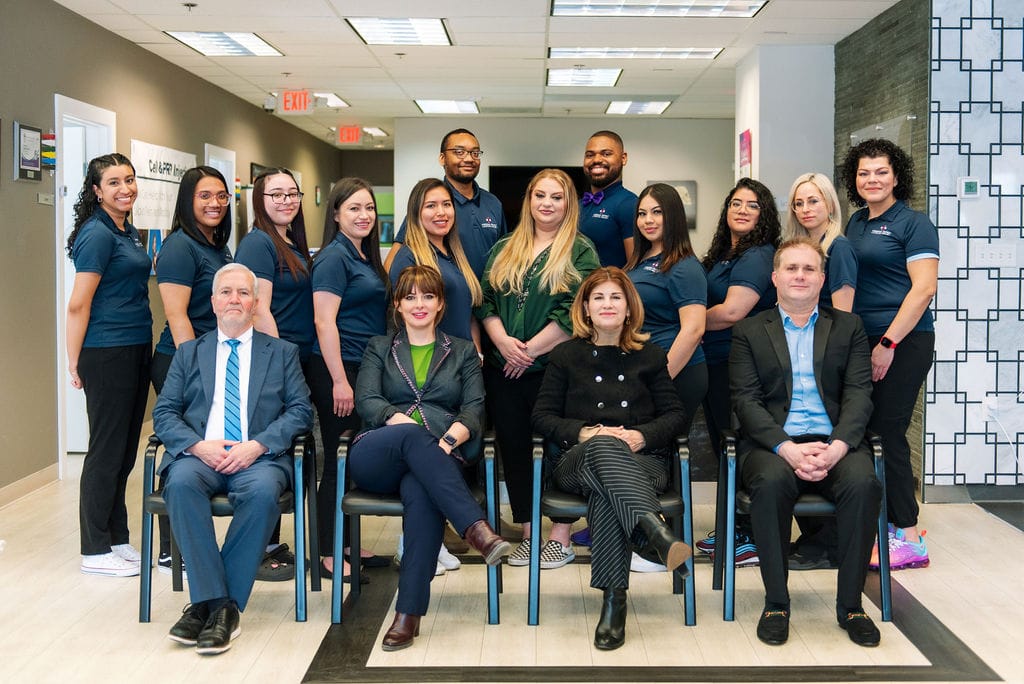
On Leesburg Pike, Five Minutes from I-66
Our Falls Church office at 7121 Leesburg Pike STE 207, Falls Church, VA 22043 sits between the East and West Falls Church Metro stations and offers ample parking - accessible whether you're commuting from Tysons, Arlington, Vienna, or McLean.
CBP-Certified Doctors
Every provider in our Falls Church office holds Chiropractic BioPhysics certification - the most published technique in the profession, supported by more than 300 peer-reviewed studies.
Integrated Medical Oversight
Chiropractors, a family nurse practitioner, and a supervising medical doctor coordinate under one roof - important for federal employees managing complex benefits and for patients arriving with imaging from Inova or Virginia Hospital Center.
Hours That Fit Beltway Commuters
Open Monday through Friday from 8:00 a.m. to 6:00 p.m. and Saturdays 9:00 a.m. to 1:00 p.m., so you can schedule before the I-66 reversible HOT lanes change direction or after a morning at Tysons Corner.
Chiropractic and Physical Medicine Services in Northern Virginia
Eleven specialized treatment modalities, delivered consistently across all four clinic locations.
Chiropractic Adjustments
Manual therapy and the Chiropractic BioPhysics protocol for herniated discs, scoliosis, postural dysfunction, and vertebral subluxation.
Chiropractic Pain Management
Multi-modal protocols for back, neck, shoulder, hip, knee, headaches, TMJ, and plantar fasciitis - rooted in structural correction, not pharmaceuticals.
Chiropractic Care for Injuries
Auto, workplace, athletic, and personal-injury rehabilitation with the clinical documentation insurance and legal proceedings require.
Chronic Conditions
Long-term management for arthritis, fibromyalgia, and chronic musculoskeletal pain. Sustainable function over short-term symptom suppression.
Laser Therapy
Cold-laser and Class IV therapeutic laser for tendonitis, bursitis, neuropathic conditions, and post-surgical recovery. No medication, no downtime.
MLS Laser Therapy
FDA-cleared dual-wavelength laser that pairs continuous and pulsed emissions to reduce inflammation and accelerate tissue repair.
Neurological Care
The NeuroMed program for diabetic and idiopathic neuropathy, carpal tunnel, drop foot, and postherpetic neuralgia.
Rehabilitation Services
Corrective exercises and functional movement training that retrain the muscular and ligamentous support structures of the spine.
Shockwave Therapy
Extracorporeal acoustic energy for chronic tendinopathies, plantar fasciitis, Achilles tendinopathy, and calcific tendinitis.
Dry Needling
Trigger-point needling for myofascial pain, muscle tension, and restricted range of motion - performed by certified clinicians.
Videofluoroscopy & Digital Motion X-Ray
Real-time fluoroscopic imaging that captures spinal function during movement - revealing instabilities and dynamic nerve compression static imaging cannot detect.
Spinal Decompression
Computer-guided, non-surgical traction for herniated and bulging discs, sciatica, and pinched nerves - relieving pressure without injections or surgery.
Care for Injuries at four Northern Virginia locations.
Care is delivered with the same CBP-certified providers, the same diagnostic technology, and the same protocols across every office.
Care for Injuries in Alexandria
Alexandria, VA 22304
Care for Injuries in Falls Church
Falls Church, VA 22043
Care for Injuries in Manassas
Manassas, VA 20110
Care for Injuries in Woodbridge
Woodbridge, VA 22191
Frequently Asked Questions
Specific to care for injuries. Call (703) 370-5300 to discuss your case.