

Filiform needles, not acupuncture.
Dry needling uses thin filiform needles to access active trigger points within muscle tissue. The needle produces a localized twitch response and a measurable change in resting muscle tone. The technique is grounded in Western anatomy and physiology - distinct from acupuncture's meridian framework.
Trigger-point targeting
The clinician palpates the active trigger point and inserts the needle directly into the taut band - producing a localized twitch and subsequent release.
Brief discomfort
Patients feel a brief deep ache when the needle enters the trigger point - typically resolving within seconds.
No medication injected
"Dry" refers to the absence of injectate - only the needle itself, with no anesthetic or other medication.
Where dry needling is most effective.
Dry needling is most useful for chronic muscle tension, persistent trigger-point activity, and post-injury soft-tissue restriction. Many Falls Church patients receive it alongside adjustments and rehab - the combination addresses joint mechanics and soft-tissue restriction simultaneously.
Cervicogenic headaches
Upper-trapezius, suboccipital, and levator scapulae needling for tension-driven headaches - common in desk-bound knowledge workers.
Low-back tension
Quadratus lumborum and lumbar paraspinal trigger points - particularly common in Falls Church commuters with long daily drive times.
Post-injury restriction
Soft-tissue restriction following auto injury, surgery, or sports injury - paired with rehabilitative exercise.
Sessions, sensations, and aftercare.
A typical dry-needling session at our Falls Church office runs 10 to 20 minutes depending on how many regions are treated. Patients sometimes feel mild post-treatment soreness for 24 to 48 hours - comparable to a deep workout - followed by improved mobility and reduced tension.
Stack with adjusting
Dry needling is often performed in the same visit as a spinal adjustment - addressing joint and soft-tissue dysfunction together.
Mild post-session soreness
A dull ache for 24 to 48 hours is normal. Hydration and gentle movement help; vigorous activity is typically fine after 24 hours.
Honest screening
Patients with bleeding disorders, certain medications, or needle phobia may not be candidates. We screen during the initial evaluation.
Why Choose Virginia Family Chiropractic?
Dry needling complements - it doesn't replace - adjusting and rehabilitative exercise. We use it when the clinical picture calls for it.
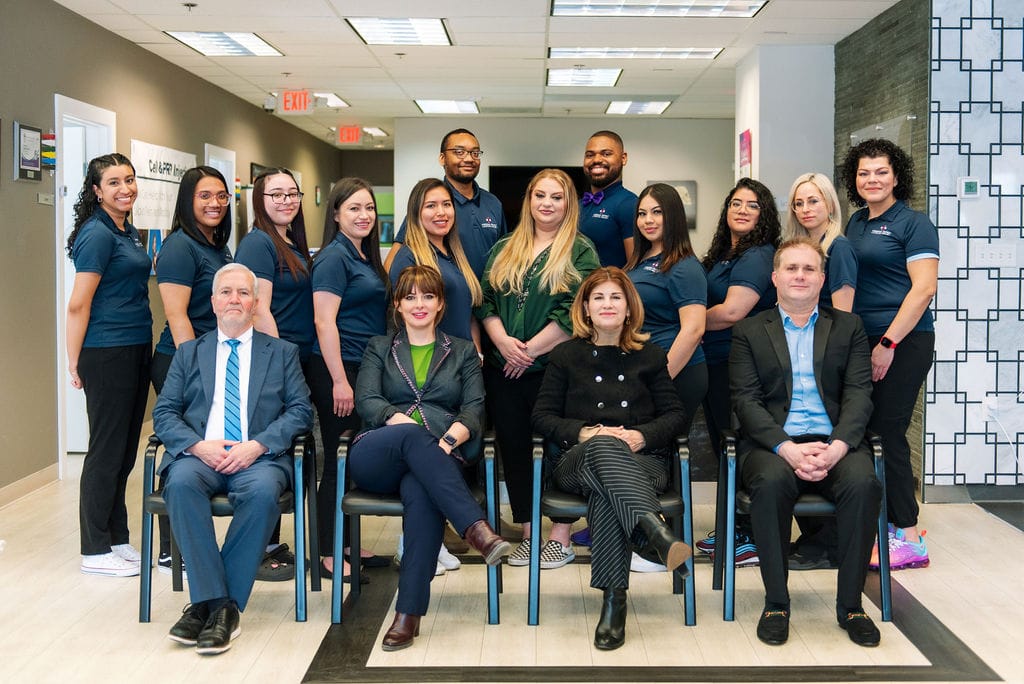
On Leesburg Pike, Five Minutes from I-66
Our Falls Church office at 7121 Leesburg Pike STE 207, Falls Church, VA 22043 sits between the East and West Falls Church Metro stations and offers ample parking - accessible whether you're commuting from Tysons, Arlington, Vienna, or McLean.
CBP-Certified Doctors
Every provider in our Falls Church office holds Chiropractic BioPhysics certification - the most published technique in the profession, supported by more than 300 peer-reviewed studies.
Integrated Medical Oversight
Chiropractors, a family nurse practitioner, and a supervising medical doctor coordinate under one roof - important for federal employees managing complex benefits and for patients arriving with imaging from Inova or Virginia Hospital Center.
Hours That Fit Beltway Commuters
Open Monday through Friday from 8:00 a.m. to 6:00 p.m. and Saturdays 9:00 a.m. to 1:00 p.m., so you can schedule before the I-66 reversible HOT lanes change direction or after a morning at Tysons Corner.
Chiropractic and Physical Medicine Services in Northern Virginia
Eleven specialized treatment modalities, delivered consistently across all four clinic locations.
Chiropractic Adjustments
Manual therapy and the Chiropractic BioPhysics protocol for herniated discs, scoliosis, postural dysfunction, and vertebral subluxation.
Chiropractic Pain Management
Multi-modal protocols for back, neck, shoulder, hip, knee, headaches, TMJ, and plantar fasciitis - rooted in structural correction, not pharmaceuticals.
Chiropractic Care for Injuries
Auto, workplace, athletic, and personal-injury rehabilitation with the clinical documentation insurance and legal proceedings require.
Chronic Conditions
Long-term management for arthritis, fibromyalgia, and chronic musculoskeletal pain. Sustainable function over short-term symptom suppression.
Laser Therapy
Cold-laser and Class IV therapeutic laser for tendonitis, bursitis, neuropathic conditions, and post-surgical recovery. No medication, no downtime.
MLS Laser Therapy
FDA-cleared dual-wavelength laser that pairs continuous and pulsed emissions to reduce inflammation and accelerate tissue repair.
Neurological Care
The NeuroMed program for diabetic and idiopathic neuropathy, carpal tunnel, drop foot, and postherpetic neuralgia.
Rehabilitation Services
Corrective exercises and functional movement training that retrain the muscular and ligamentous support structures of the spine.
Shockwave Therapy
Extracorporeal acoustic energy for chronic tendinopathies, plantar fasciitis, Achilles tendinopathy, and calcific tendinitis.
Dry Needling
Trigger-point needling for myofascial pain, muscle tension, and restricted range of motion - performed by certified clinicians.
Videofluoroscopy & Digital Motion X-Ray
Real-time fluoroscopic imaging that captures spinal function during movement - revealing instabilities and dynamic nerve compression static imaging cannot detect.
Spinal Decompression
Computer-guided, non-surgical traction for herniated and bulging discs, sciatica, and pinched nerves - relieving pressure without injections or surgery.
Dry Needling at four Northern Virginia locations.
Care is delivered with the same CBP-certified providers, the same diagnostic technology, and the same protocols across every office.
Dry Needling in Alexandria
Alexandria, VA 22304
Dry Needling in Falls Church
Falls Church, VA 22043
Dry Needling in Manassas
Manassas, VA 20110
Dry Needling in Woodbridge
Woodbridge, VA 22191
Frequently Asked Questions
Specific to dry needling. Call (703) 370-5300 to discuss your case.