
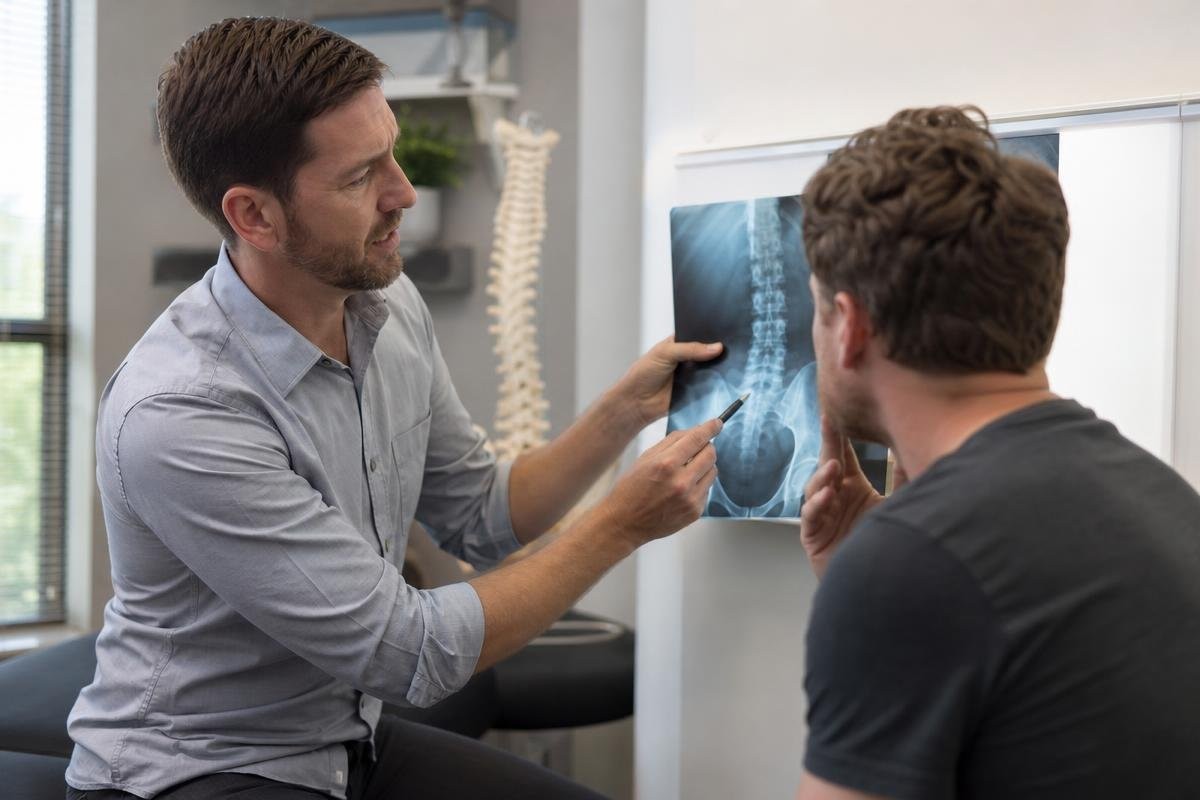
Yes, your back can cause neuropathy. Spinal conditions like herniated discs, spinal stenosis, and degenerative disc disease put direct pressure on spinal nerves, triggering the burning, numbness, and tingling that define neuropathic pain. If you live or work in Alexandria and spend long hours commuting or sitting at a desk, that daily strain accelerates exactly the kind of spinal changes that lead to nerve damage. At Virginia Family Chiropractic & Physical Medicine, our licensed chiropractors have treated the root causes of neuropathy since 2008, using drug-free, non-surgical solutions built around your specific diagnosis.
Key Takeaways
- Your back can cause neuropathy when spinal conditions compress or irritate nearby nerves.
- Herniated discs, spinal stenosis, and degenerative disc disease are the most common spinal triggers of neuropathic pain.
- Symptoms like burning, numbness, and tingling in the legs or feet may trace back to a spinal problem, not a peripheral nerve disorder.
- Drug-free chiropractic care and physical medicine can address the spinal root cause, not just the nerve symptoms.
- Early diagnosis and treatment improve long-lasting relief outcomes and may reduce the need for surgery.
The Direct Answer: Can Your Back Cause Neuropathy?
Yes, your back can absolutely cause neuropathy. If you feel numbness, burning, or tingling in your legs or feet, a spinal problem may be the source. Many patients spend months, even years, chasing the wrong diagnosis before anyone connects their back to their nerve symptoms.
Below you will find the spinal conditions that trigger neuropathic pain, the warning signs to watch for, and the non-surgical treatment options available right here in Alexandria. If you are already experiencing symptoms, our neuropathy treatment page explains what to expect at your first visit.
What Is Neuropathy, and Why Does It Matter for Back Pain Patients?

Neuropathy means nerve damage or nerve dysfunction. It is not the same as ordinary back pain. Regular back pain usually comes from muscles, joints, or discs. Neuropathy means the nerves themselves are being irritated, compressed, or damaged, and that creates a different set of symptoms entirely.
Spinal problems and nerve damage often occur together. Understanding the difference matters because the right treatment depends on knowing exactly what is being affected. Our care approach starts with identifying whether your spine is the source of your nerve symptoms rather than treating the symptoms in isolation.
How the Nervous System Runs Through Your Spine
Your spinal cord travels through a bony channel called the vertebral canal. At each spinal level, 31 pairs of nerve roots branch off and exit through small openings called foramina. Each nerve root controls sensation and movement in a specific region of your body, known as a dermatome. When a disc bulges, a vertebra shifts, or bone spurs develop, those openings narrow. The nerve root gets compressed or irritated. That is when spinal neuropathy causes symptoms like burning, numbness, or weakness far from the actual injury site. Northern Virginia commuters routinely face some of the longest travel times in the country, and Alexandria residents who spend an hour or more each way on I-395 or the Beltway sit through exactly the kind of sustained spinal loading that accelerates foraminal narrowing without realizing it.
Peripheral Neuropathy vs. Radiculopathy - What Is the Difference?
Radiculopathy is nerve compression at the spine itself. Sciatica is the most familiar example. Peripheral neuropathy is damage to nerves outside the spinal cord, often affecting the hands and feet. The symptoms can look similar, but the root cause and the treatment path are different.
You can have both conditions at the same time. This is a detail many patients miss, and some providers miss it too. Someone treated only for peripheral neuropathy may not improve if an unaddressed spinal compression is still driving the problem. Our pain management chiropractor team evaluates both possibilities before recommending a care plan. Knowing whether your spine is behind your nerve pain changes everything about how we treat it.
Which Spinal Conditions Actually Cause Neuropathy?
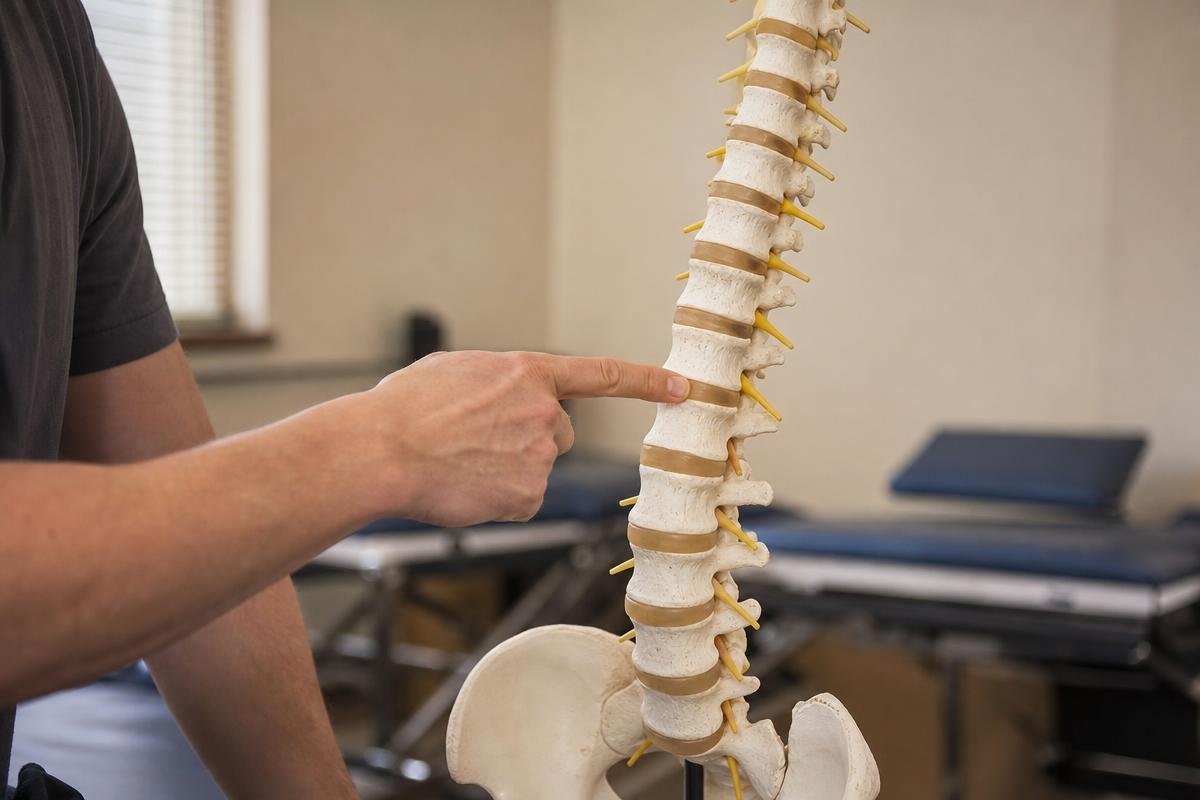
Several specific spinal diagnoses are known to cause neuropathic pain, and they are more common than most patients realize. A herniated disc, narrowed spinal canal, or degenerative changes in the vertebrae can all compress or irritate nerve roots directly. That compression is what produces the burning, tingling, and weakness you feel far from your back.
Herniated Discs and Nerve Root Compression
A herniated disc occurs when the soft inner material of a spinal disc pushes through its outer wall and contacts a nearby nerve root. At L4-L5 and L5-S1 in the lower back, this typically compresses the sciatic nerve. The result is burning or electric pain that shoots down one leg, numbness in the foot, and sometimes weakness in the calf or ankle. Cervical herniations at C5-C6 or C6-C7 produce the same pattern in the arm and hand.
This is one of the most direct causes of herniated disc neuropathy. The nerve root does not have to be fully severed to produce severe symptoms. Even mild, sustained pressure is enough to disrupt normal nerve signaling. Our team addresses this through chiropractic adjustments designed to reduce that pressure at the source.
Spinal Stenosis - When the Canal Narrows
Spinal stenosis narrows the spinal canal or the small openings where nerve roots exit the spine. This is one of the leading spinal neuropathy causes in patients over 50, and Northern Virginia's growing older population sees it frequently. The signature symptom is neurogenic claudication: leg pain and numbness that gets worse the longer you walk and improves when you sit down or lean forward.
If your leg symptoms ease when you stop walking and sit on a bench, spinal stenosis neuropathy symptoms are a likely explanation. This pattern is distinct from vascular causes and points directly to the spine as the source.
Degenerative Disc Disease, Bone Spurs, and Spondylolisthesis
As discs lose height over time, the foraminal openings where nerves exit the spine narrow. Bone spurs, called osteophytes, can grow into those same openings and press against nerve roots. Spondylolisthesis adds another layer: when one vertebra slips forward over another, it can pinch the cauda equina, the bundle of nerves at the base of the spine.
Many Alexandria patients over 60 dismiss these changes as normal aging. They are common, but they are not harmless. Neuropathic pain from spine degeneration is treatable. Common symptoms from these causes include:
- Persistent burning or tingling in one arm or leg
- Weakness in a specific muscle group
- Loss of deep tendon reflexes
- Pain that follows a predictable path down the limb
If these symptoms sound familiar, our neuropathy treatment program is built to address the spinal root cause, not just the pain signal.
How to Tell If Your Back Is the Source of Your Nerve Pain
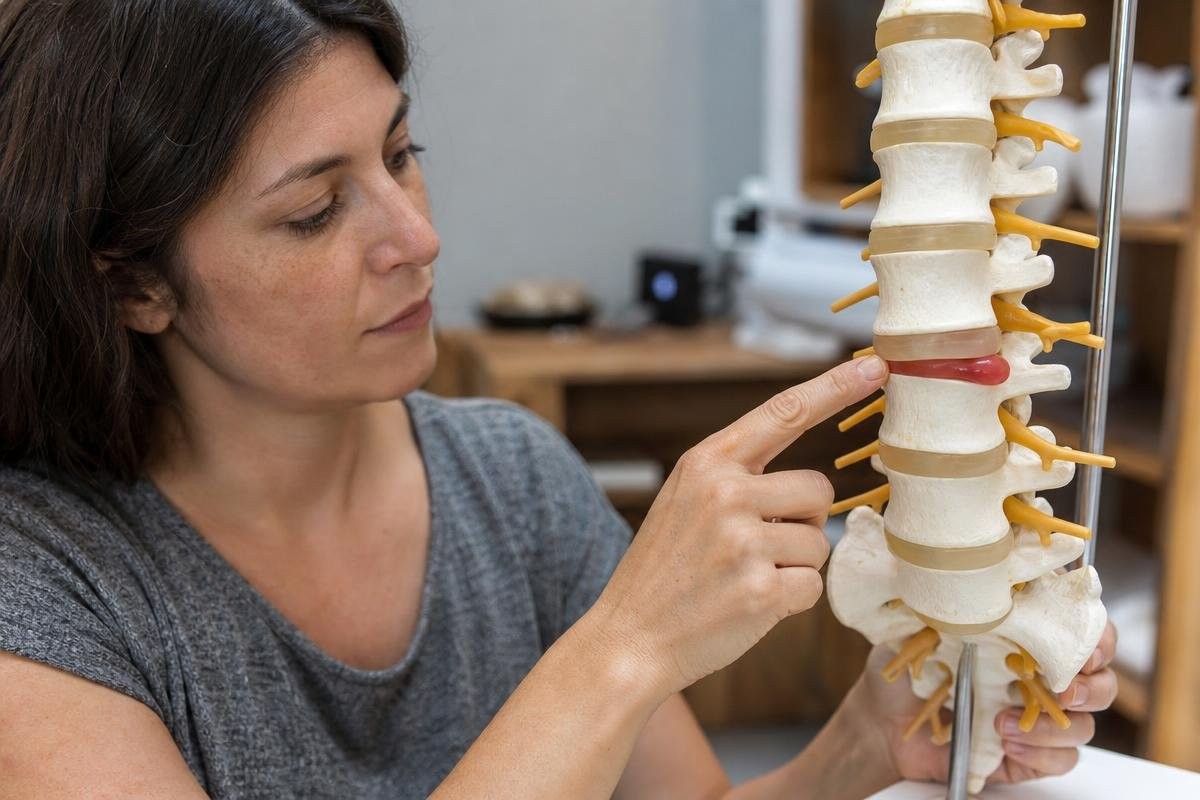
Before your appointment, a few simple questions can help you gauge whether your spine is likely driving your symptoms. None of these replace a clinical exam, but they give you and your provider a useful starting point.
- Do your symptoms follow one specific path down a single arm or leg, rather than affecting both sides equally?
- Does the pain, numbness, or tingling change when you bend, sit, stand, or shift your posture?
- Did your nerve symptoms begin around the same time as new or worsening back or neck pain?
- Do certain positions, like leaning forward on a shopping cart, relieve your leg symptoms?
If you answered yes to two or more of these, a spinal source is likely, and a targeted evaluation is worth scheduling. If you have been dealing with recurring nerve symptoms, speaking with a chronic pain chiropractor is a practical next step.
Not sure if your back is causing your nerve pain? A diagnostic evaluation identifies the source so you stop guessing. Schedule yours before symptoms progress.
Recognizing the Symptoms: When Back Problems Are Behind Your Nerve Pain
Many patients spend months managing what they assume is "just sciatica" or "just a bad back," not realizing their spine is actively damaging nearby nerves. Spinal neuropathy causes a recognizable pattern of symptoms. Knowing what to look for can save you from months of unnecessary suffering.
Symptoms That Point to a Spinal Source
The clearest sign that your back is behind your nerve pain is a dermatomal pattern. That means symptoms follow a specific path along your arm or leg, matching the compressed nerve root. Diabetic neuropathy typically causes symmetric tingling in both feet. Spinal neuropathy is usually one-sided and travels along a predictable route.
Common symptoms of spine-related nerve damage include:
- Burning or shooting pain traveling from your lower back into one leg
- Numbness or tingling in a specific finger, hand, or foot region
- Muscle weakness in one limb, such as foot drop or dropping objects
- Loss of deep tendon reflexes on one side
- Pain that changes when you shift your spine position, sit, or stand
Symptoms can be intermittent early on. They often become constant as compression worsens. If your symptoms shift with posture or activity, that is a strong sign your spine is involved. Our team can help identify the source through a thorough evaluation.
Red Flags That Require Prompt Evaluation
Most spinal neuropathy symptoms allow time to schedule a standard appointment. A few do not. These symptoms mean you should call today, not wait and see:
- Loss of bladder or bowel control
- Numbness in your inner thighs or groin area
- Progressive weakness spreading into both legs
- Rapidly worsening neurological deficits over hours or days
These can indicate cauda equina syndrome, a serious spinal emergency. Do not wait on these. Contact us immediately or go to an emergency room. For symptoms that are concerning but not emergencies, early evaluation gives you the best chance at non-surgical relief.
Non-Surgical Treatment Options for Spine-Related Neuropathy
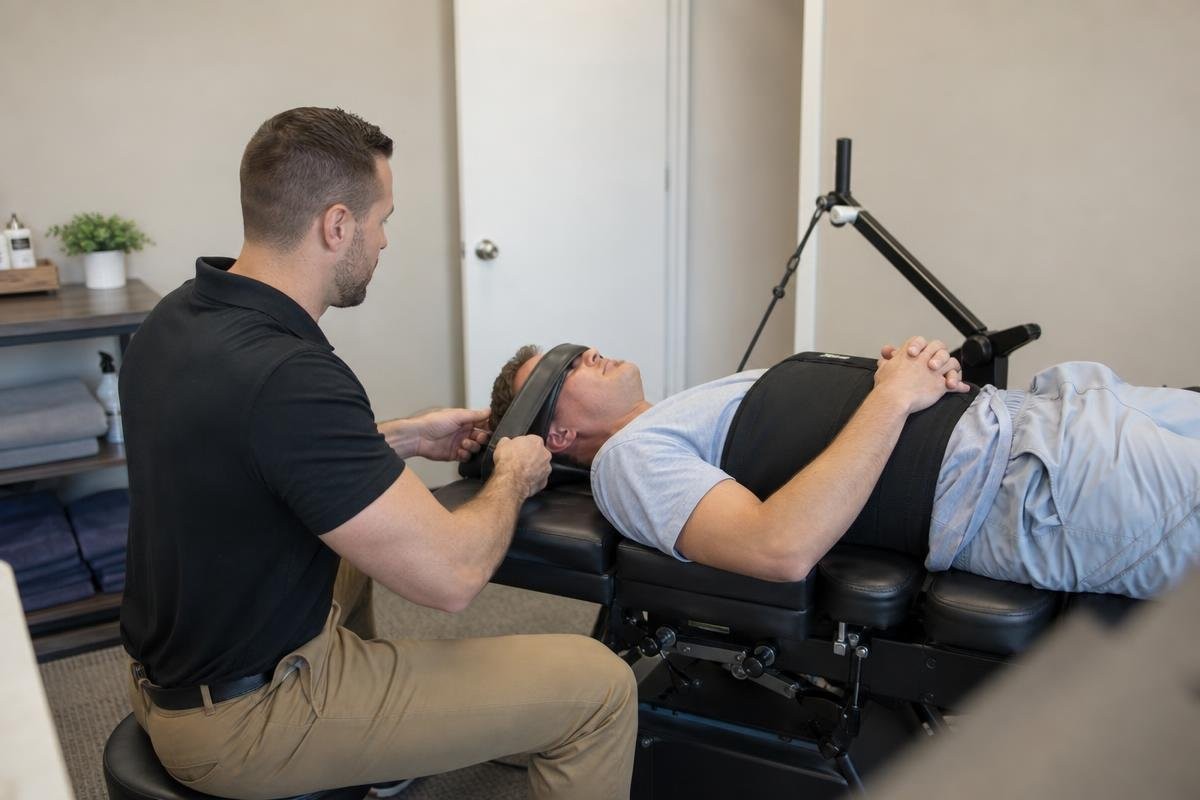
Surgery is not your only option. If you are dealing with neuropathic pain from spine conditions like a herniated disc or spinal stenosis, there are proven, drug-free approaches that address the root cause. We have treated Alexandria patients with these non-surgical solutions for well over a decade, and individualized care plans make a real difference in outcomes.
Spinal Decompression Therapy
Spinal decompression uses a motorized traction table to create negative pressure inside the disc. That pressure gently draws herniated disc material back toward center, taking direct compression off the nerve root. Sessions run 15 to 30 minutes. You stay fully clothed. There is no cutting and no recovery time.
This approach works especially well for herniated disc neuropathy and spinal stenosis neuropathy symptoms. Both lumbar and cervical decompression are available at our Alexandria office. Many patients notice reduced tingling and numbness within the first few visits.
MLS Laser Therapy for Nerve Pain
MLS (Multiwave Locked System) laser therapy delivers dual-wavelength laser energy directly to inflamed nerve tissue. It reduces swelling around compressed nerves, accelerates nerve tissue repair, and quiets neuropathic pain signals. The treatment is FDA-cleared and completely painless. Most patients feel nothing more than a mild warmth during the session.
For patients with chronic neuropathic pain from spine conditions, laser therapy pairs well with decompression. Our laser therapy services are designed for patients of all ages and abilities, including the growing number of Northern Virginia residents over 60 managing degenerative disc disease.
Chiropractic Adjustments and Rehabilitation
Precise chiropractic adjustments restore vertebral alignment and reduce foraminal narrowing, which is the main mechanical cause of nerve root pressure. We match the adjustment technique to your condition and comfort level, whether that means manual, Activator, or Impulse methods.
Adjustments alone are only part of the plan. Chiropractic rehabilitation exercises build the spinal stability needed to keep symptoms from returning. For patients with significant muscle tension around the compressed nerve, dry needling can be added as an adjunct to the core plan.
- Spinal decompression for disc-related nerve compression
- MLS laser therapy for nerve inflammation and repair
- Chiropractic adjustments to restore alignment and reduce foraminal narrowing
- Rehabilitation exercises to stabilize the spine long-term
- Dry needling to release muscle tension around compressed nerves
Suffering from nerve pain tied to a back condition? Our team offers a full range of non-surgical solutions at our Alexandria office. Find out which treatment fits your situation.
Why Alexandria Patients Choose Virginia Family Chiropractic for Nerve Pain
If you are asking can your back cause neuropathy, you deserve answers from a team with real experience treating spine-related nerve pain. Virginia Family Chiropractic has served the West End and surrounding areas since 2008, building a track record of individualized, drug-free care for patients of all ages.
Our office sits at 50 S Pickett St STE 114, Alexandria, VA 22304, right off I-395. That location makes it easy for commuters from Del Ray, Old Town, and the Landmark corridor to stop in without adding extra drive time to their day.
Our chiropractors, including Dr. Cassou and Dr. Gyzel, build a care plan around your specific diagnosis. No two patients receive the same protocol. Whether your nerve pain traces back to a herniated disc, spinal stenosis, or foraminal narrowing, we match the treatment to the cause.
Patients consistently highlight attentive staff, prompt answers to their questions, and targeted adjustments that address chronic back discomfort directly. With 1,934 reviews averaging 4.9 out of 5 stars, that feedback speaks for itself.
What sets our approach apart:
- Nearly two decades of neuropathy and spine care experience
- Non-surgical, drug-free treatment options
- Spinal decompression, laser therapy, and pain management chiropractor services under one roof
- Individualized care plans for patients of all ages and abilities
- Convenient West End location accessible from I-395 and the Beltway
Neuropathy and Back Pain in Alexandria, VA: What Local Patients Experience
Residents across Del Ray, Old Town, the West End, and Beverley Hills face daily conditions that put real stress on the spine. Long commutes on I-395 and packed rides from King Street Metro mean hours of sustained sitting. That prolonged pressure raises intradiscal load and speeds up disc degeneration, one of the most direct spinal neuropathy causes our team sees.
Federal employees, contractors, and military-connected residents near the Pentagon and Eisenhower Avenue corridors and Fort Belvoir carry an added risk. Desk work combined with physically demanding service histories creates a pattern we see often: chronic back trouble that quietly progresses into nerve involvement before anyone connects the two. If you are unsure whether your symptoms include nerve damage, our neuropathy treatment page explains what to watch for.
Adults over 60 in Northern Virginia face the highest rates of spinal stenosis and degenerative disc disease, both leading drivers of nerve pain. If balance or fall risk is also a concern, read our guide on how Alexandria seniors can improve balance and prevent falls. Our team provides drug-free pain management built around your specific diagnosis, not a generic protocol.
We serve patients from zip codes 22301, 22302, 22304, and 22314. Our office sits at 50 S Pickett St STE 114, Alexandria, VA 22304, convenient to I-395 and the Beltway. We also treat patients traveling from Falls Church, Manassas, and Woodbridge. Workers comp cases involving spinal injuries are also accepted.
Frequently Asked Questions
Can a herniated disc cause permanent nerve damage?
It can, but permanent damage is far less common when you seek care early. A herniated disc that presses on a nerve root long enough can cause lasting injury. Most patients who address herniated disc neuropathy promptly see significant improvement with the right treatment plan.
How do I know if my neuropathy is from my spine or from diabetes?
The pattern of symptoms is the first clue. Spinal neuropathy typically follows one nerve root path, causing sharp or shooting pain on one side of the body. Diabetic neuropathy tends to affect both feet symmetrically with diffuse burning or pins-and-needles. Orthopedic and neurological testing at our office identifies the source so your care targets the right cause.
What does spine-related neuropathy feel like compared to diabetic neuropathy?
Spinal stenosis neuropathy symptoms usually feel like electric, shooting pain that travels along one specific path from your back into a leg or arm. Diabetic neuropathy feels more like a diffuse, bilateral burning in both feet at the same time. If your symptoms are one-sided and worsen with certain positions, your spine is likely involved.
Can chiropractic care reverse neuropathy caused by spinal compression?
When mechanical compression is removed from the nerve, the nerve can heal and symptoms can resolve. Results depend on how long the compression has been present and how severe it is. Our neuropathy treatment plans are designed to address the root cause, not just manage symptoms.
How many sessions will I need?
There is no single answer. It depends on your diagnosis, how long you have had symptoms, and how your body responds. Most patients notice improvement within the first few weeks. Care plans are reassessed regularly so your treatment stays matched to your progress.
Is spinal decompression safe for nerve pain?
Spinal decompression is safe for most disc-related nerve compression cases. It is not appropriate for fractures, severe osteoporosis, or patients with spinal hardware. We review your full health history and imaging before making any recommendation.
If burning, tingling, or numbness is affecting your daily life, do not wait for symptoms to get worse. Call Virginia Family Chiropractic & Physical Medicine at our office at 50 S Pickett St STE 114, Alexandria, VA 22304 to schedule an evaluation. Our team will identify whether your spine is the source of your nerve pain and build a care plan designed for your specific condition. You can also take our neuropathy quiz to get a clearer picture of your symptoms before your first visit.