

Shoulder pain after sleeping can be unsettling, especially when it makes getting dressed, reaching overhead, or starting the day uncomfortable. A night of pressure on the shoulder may aggravate sensitive tissues, but waking up sore does not reveal the cause by itself. For Northern Virginia adults, the useful first step is to notice where the discomfort is, what movements affect it, whether there was a recent injury, and how long it has been happening.
If shoulder discomfort is affecting your routine, Virginia Family Chiropractic & Physical Medicine can help you understand the next step. Contact the team or call the office nearest you: Alexandria at (703) 370-5300, Falls Church at (703) 538-3830, Manassas at (703) 367-7878, or Woodbridge at (703) 499-8840.
Key Takeaways
- Lying on a sore shoulder or keeping the arm in one position for a long time may aggravate symptoms, but sleep position alone cannot diagnose an injury.
- Rotator cuff irritation, bursitis, stiffness, arthritis, and referred pain are among several possible explanations for shoulder discomfort.
- Small comfort adjustments, such as supporting the arm and changing positions, may reduce pressure while you monitor symptoms.
- Seek prompt medical advice for severe pain, a major loss of movement, new weakness after an injury, or symptoms that keep worsening.
- Shoulder pain with chest pressure, shortness of breath, sweating, nausea, or lightheadedness can be an emergency. Call 911 rather than assuming it is a shoulder problem.
Why Shoulder Pain Can Feel Worse After a Night in Bed
The shoulder is built for a large range of motion. The upper arm bone meets a shallow socket in the shoulder blade, while muscles, tendons, ligaments, and a small fluid-filled sac help the joint move and remain stable. That mobility is useful for reaching and lifting, but it also means that several different tissues can contribute to pain.
During sleep, you may stay in one position longer than you would while awake. If you lie directly on a sensitive shoulder, rest your arm under your body, or keep it overhead, pressure or a sustained position may make an existing irritation more noticeable. The American Academy of Orthopaedic Surgeons overview of shoulder problems describes several common sources, including tendon or bursa inflammation, instability, arthritis, and fractures.
That does not mean a particular sleep position caused a structural injury. Shoulder pain has many possible causes, and a sleep-related pattern is only one detail to discuss with a clinician. If shoulder pain after sleeping happens repeatedly, note whether the discomfort fades after you get moving, returns with a particular activity, or continues throughout the day.
Common Reasons a Shoulder May Hurt on Waking
An ache that is strongest after lying on one side may reflect pressure on already-sensitive tissues. The rotator cuff is a group of tendons and muscles that helps lift and rotate the arm. Tendon irritation or a tear can cause pain with reaching, lifting, or lying on the affected side. A bursa, which cushions movement in the shoulder, can also become irritated. These are possibilities, not conclusions that can be made from a symptom description.
Stiffness can also make the first movements of the morning feel harder. A person may notice a sore shoulder after a day with more lifting, overhead work, sports, or repetitive reaching. Pain can also be referred from the neck or upper back, so discomfort felt near the shoulder does not always start in the shoulder joint itself.
| What you notice | Why it may be useful information | What it cannot tell you |
|---|---|---|
| Pain when lying on one side | The position may place pressure on sensitive tissues. | It does not prove the shoulder was damaged by sleeping that way. |
| Pain when reaching or lifting | The movement pattern can help a clinician assess which structures may be involved. | It cannot identify a specific tendon or joint condition on its own. |
| Stiffness that eases or changes after moving | The timing and response to movement help describe the symptom pattern. | A brief improvement does not rule out a condition that needs evaluation. |
| Pain that travels from the neck or down the arm | Pain location and any tingling or weakness are important details to report. | A blog or symptom chart cannot determine whether a nerve is involved. |
The University of Iowa Health Care's guidance on shoulder pain while sleeping recommends an evaluation when pain regularly disrupts sleep, limits daily activities, worsens, or does not improve after a short period of home care. Do not wait on a fixed timeline if symptoms are severe or concerning.
How to Make Your Sleep Setup More Comfortable
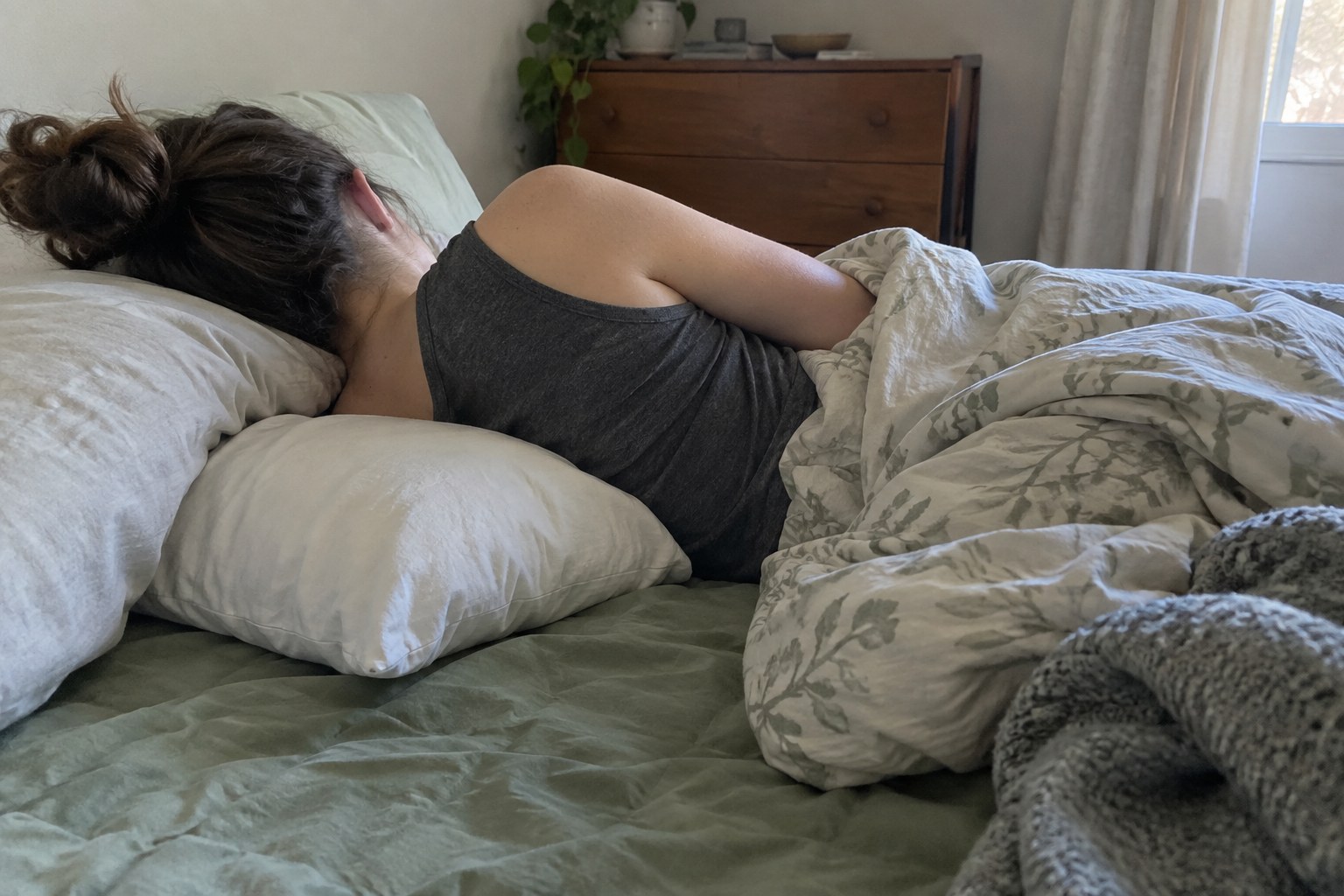
If there are no urgent symptoms, a few low-risk adjustments may help you avoid putting extra pressure on the area while you observe what happens. Try not to lie directly on the sore shoulder for a while. If you sleep on your side, resting on the other side and placing a pillow in front of your chest to support the upper arm may feel more comfortable. If you sleep on your back, a small pillow under the arm can reduce the feeling that it is pulling backward.
These are comfort ideas, not a treatment plan. There is no single sleep position that suits every shoulder, and a pillow should not force the arm into a painful angle. Change one thing at a time so you can tell whether it helps. If a position increases pain, numbness, or tingling, stop using it and seek advice.
Keep a brief symptom note for several days: when pain begins, which side you slept on, whether you had an unusually active day, and which movements feel limited. This can help a clinician see whether the pattern is linked to pressure, activity, or another factor. Avoid testing the shoulder repeatedly with heavy lifting or forceful stretching just to see what hurts.
When pain keeps returning or interferes with everyday tasks, consider an evaluation instead of continually changing pillows. Virginia Family Chiropractic & Physical Medicine provides chiropractic and physical medicine services across the region; its locations page lists the four offices and contact details.
When Shoulder Pain Deserves Medical Attention
Arrange an evaluation when discomfort is getting worse, repeatedly wakes you, limits normal activities, or has not started to improve. New weakness, difficulty raising the arm, swelling, warmth, or a recent fall or impact are also reasons to seek medical advice. After an injury, a clinician can assess whether imaging or another type of care is appropriate.
Get urgent help for sudden severe pain, a visibly changed shoulder shape, a very swollen arm, loss of sensation, or inability to move the arm. If shoulder discomfort occurs with chest pressure or pain, shortness of breath, cold sweat, nausea, dizziness, or pain in the jaw, back, or arm, call 911. The U.S. National Library of Medicine's MedlinePlus heart attack information notes that heart attack symptoms can include discomfort in the shoulders and other upper-body areas; do not assume these symptoms are a muscle problem.
If there is no emergency, start with a healthcare professional who can review the full picture. They may ask about the onset, sleep and work positions, recent activity, injury history, pain at rest or with movement, and any numbness or weakness. An exam may include checking movement and strength. The findings guide whether additional tests or referral to another clinician are needed.
What to Tell a Clinician About Shoulder Pain After Sleeping

Clear details help an appointment stay focused. Describe the exact area of pain, whether it reaches the neck or arm, what time it tends to appear, and whether lying on the affected side changes it. Mention how long symptoms have lasted, what daily activities are difficult, and any recent exercise, overhead work, lifting, or injury.
Also mention any tingling, numbness, weakness, fever, swelling, or previous shoulder problem. If you have tried a different sleeping position or pillow, share what changed. Bring a list of relevant medicines and health conditions, and be candid about what you need to do at work, at home, or during exercise.
Treatment depends on the cause and the person's overall health. It may involve activity changes, guided exercise, medication or other medical treatment, or referral for specialist assessment. A provider can explain the options and the risks. The clinic's pain management services page describes its local care model; an evaluation is needed to decide whether any service is suitable for an individual.
A Practical Morning Check-In
When you wake with shoulder pain after sleeping, start gently. Notice whether the arm moves comfortably through ordinary, unforced activities. Do not push through sharp pain or test the shoulder with a heavy object. If you feel well enough, get dressed and move around at a comfortable pace, then note whether the symptoms settle, stay the same, or become more intense.
A single sore morning may pass, but recurring or worsening pain merits attention, especially when sleep and daily function are affected. Treat the symptom pattern as useful information rather than a diagnosis. If there are urgent warning signs, seek care immediately. Otherwise, a qualified healthcare professional can help you decide what evaluation and next steps make sense.
For general questions about scheduling, use the clinic's contact page or call the Alexandria office at (703) 370-5300. If you are experiencing an emergency, call 911.
About Virginia Family Chiropractic & Physical Medicine
Virginia Family Chiropractic & Physical Medicine has served Northern Virginia since 2008, with offices in Alexandria, Falls Church, Manassas, and Woodbridge. The practice website describes chiropractic and physical medicine services, including rehabilitation, pain management, and diagnostic services. A clinician must assess an individual's symptoms before recommending care. See the practice website for current office information and service details.
Frequently Asked Questions
Can sleeping on my side cause shoulder pain?
Lying on one side can put pressure on the shoulder and may aggravate discomfort, particularly if the area is already irritated. That does not prove that side sleeping caused an injury. If pain keeps returning, affects movement, or disrupts sleep, describe the pattern to a healthcare professional so they can consider the full range of possible causes.
Why does shoulder pain feel worse at night?
A sore shoulder may be compressed when you lie on it, and staying in one position can make symptoms more noticeable. Night pain can also occur with several shoulder conditions. The time of day alone cannot identify the cause, so consider how long the pain lasts and whether weakness, reduced movement, or a recent injury is present.
Should I stop sleeping on the painful shoulder?
If lying on that side increases pain, try another comfortable position and support the arm with a pillow rather than forcing it into an awkward angle. These are temporary comfort measures, not a diagnosis or cure. If changing position does not help, or symptoms keep getting worse, seek individualized medical advice.
When should I get shoulder pain checked?
Seek an evaluation if the pain is worsening, keeps interrupting sleep, limits usual tasks, or has not started to improve. Sudden severe pain, a visible deformity, major swelling, new weakness after an injury, or inability to move the arm needs prompt attention. Chest symptoms or shortness of breath call for emergency help.
Can neck problems feel like shoulder pain?
Pain near the shoulder can sometimes come from the neck or another nearby area, and nerve symptoms may include tingling or numbness. The location of pain alone cannot confirm the source. Tell a clinician where the discomfort travels, what movements change it, and whether you notice weakness or altered sensation.
What should I write down before an appointment?
Note when symptoms began, which sleep positions seem to affect them, what movements are difficult, whether there was a recent injury or increase in activity, and how pain changes during the day. Include any numbness, tingling, weakness, swelling, fever, and relevant medications or health conditions.
This information is for general education and cannot diagnose shoulder pain. Shoulder pain after sleeping can have several explanations, and the right next step depends on your symptoms and health history. Virginia Family Chiropractic & Physical Medicine serves Northern Virginia from four offices; see office locations or call (703) 370-5300 to ask about scheduling. For sudden severe symptoms or possible heart attack signs, call 911.
Ready to Talk With Virginia Family Chiropractic?
Virginia Family Chiropractic & Physical Medicine serves Northern Virginia from offices in Alexandria, Falls Church, Manassas, and Woodbridge. To ask about an appointment, call Alexandria at (703) 370-5300, Falls Church at (703) 538-3830, Manassas at (703) 367-7878, or Woodbridge at (703) 499-8840, or use the contact page.