
Falls are the leading cause of injury among adults over 65, and poor balance is often the warning sign people miss. If you or a loved one has been dealing with unsteadiness, dizziness, or a fear of falling, there are proven steps to address the root cause. Virginia Family Chiropractic & Physical Medicine has been serving Alexandria seniors since 2008, offering a drug-free approach that combines chiropractic care and physical medicine to help patients of all ages learn how to improve balance and stay on their feet safely.
Ready to take the first step toward steadier footing? Call our Alexandria office to schedule your visit.
Key Takeaways
- Poor balance in seniors is a treatable condition, not an unavoidable part of aging.
- Spinal alignment and nerve function both directly affect your body's ability to maintain balance.
- Targeted strength training and balance exercises are two of the most effective drug-free tools available.
- An integrated chiropractic and physical medicine approach addresses the root cause of balance problems, not just the symptoms.
- Fall prevention care is available locally in Alexandria for seniors at any fitness level.
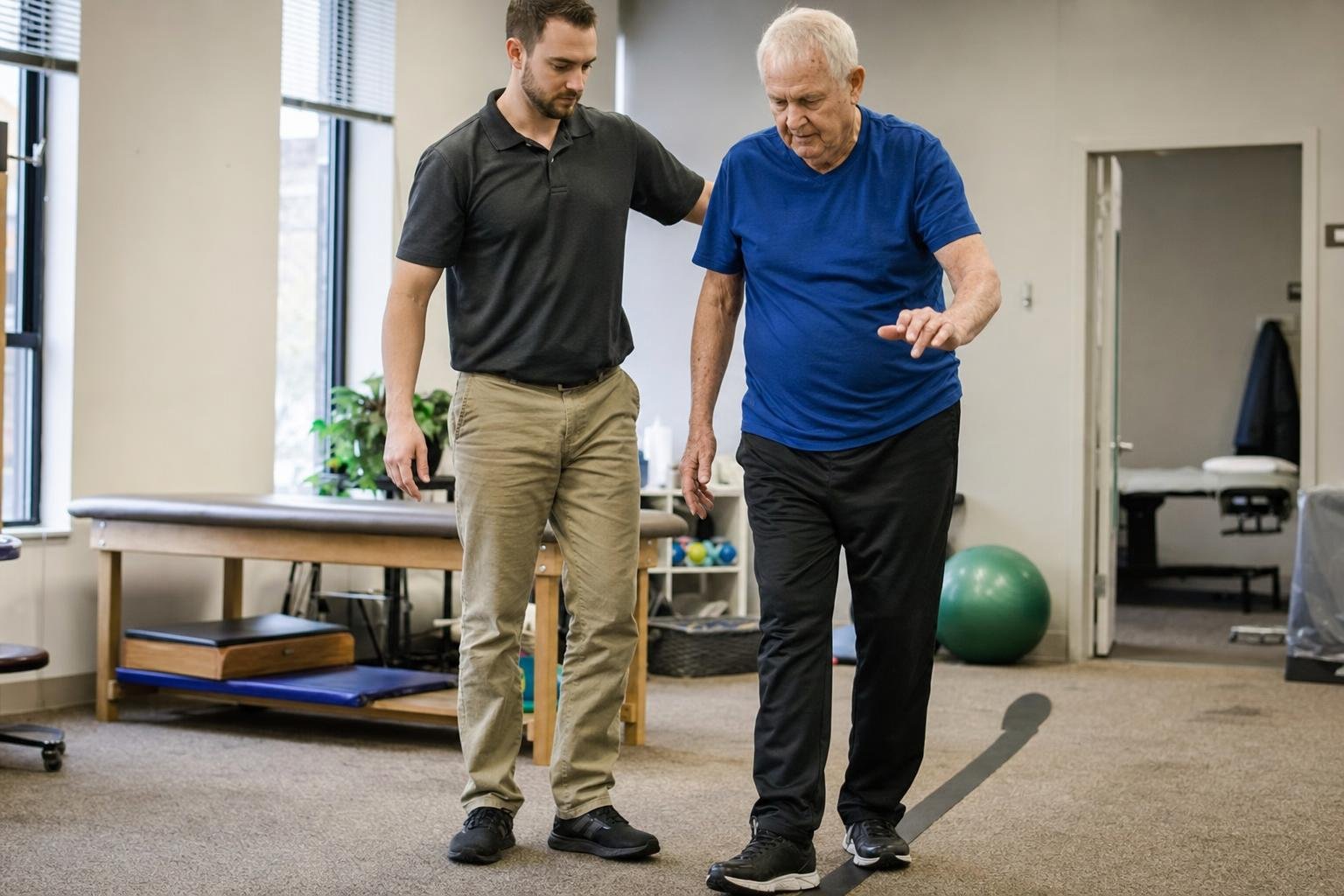
Do You Feel Unsteady on Your Feet?
Are you gripping railings more than you used to? Do uneven sidewalks make you nervous? You are not alone. Falls are the leading cause of injury-related emergency room visits among adults over 65 in the United States. That is not a small problem, and it is not something you have to accept.
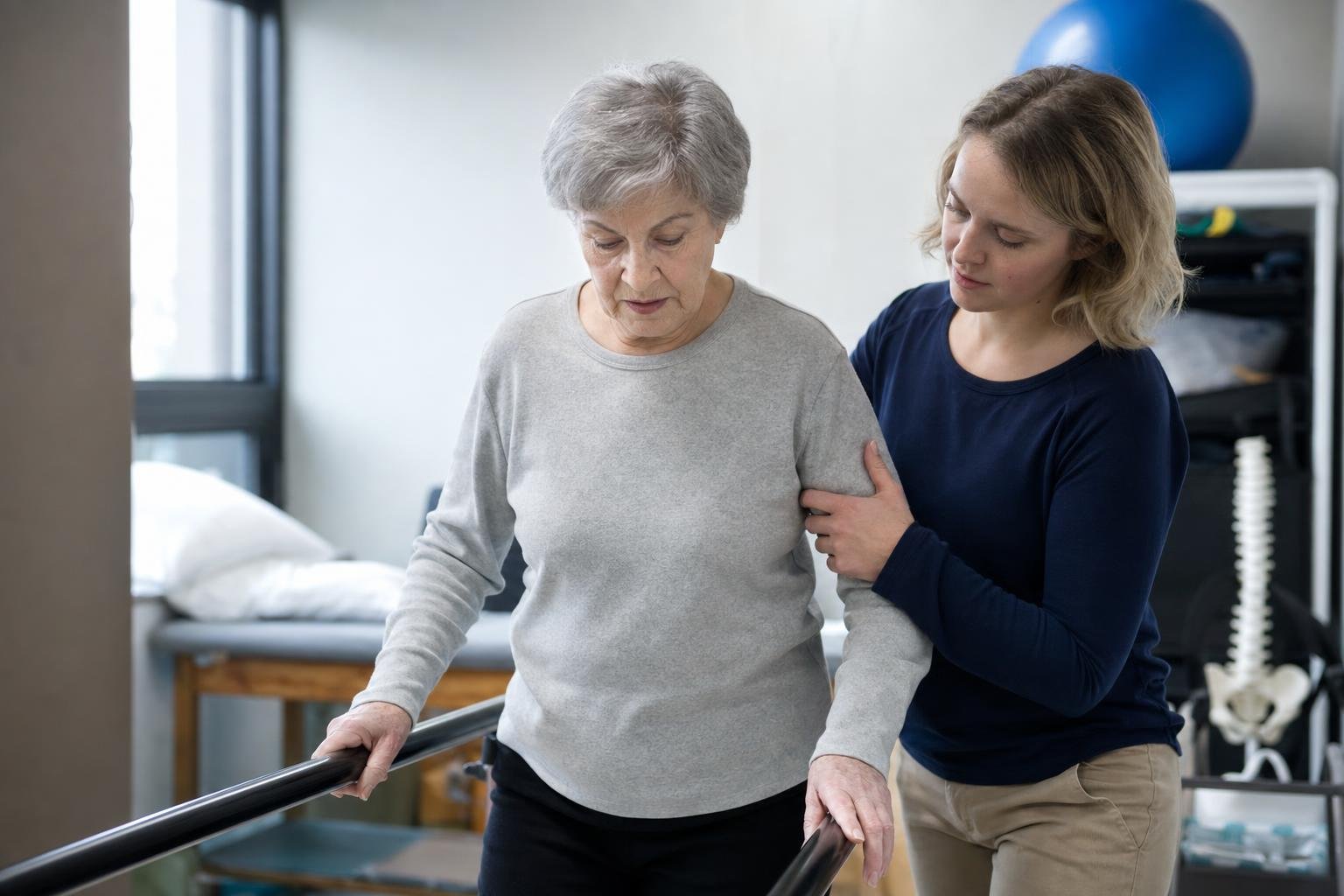
Yes, balance does change with age. But declining balance is not inevitable. The right exercises, strength training habits, and proper care can make a real difference. Virginia Family Chiropractic & Physical Medicine has been helping Northern Virginia seniors move with more confidence since 2008. Our team at 50 S Pickett St STE 114 takes a drug-free approach built around individualized care.
Read on for practical steps you can start this week.
Why Balance Declines as You Age and What Is Actually Happening
Your balance feels fine until it does not. That is the tricky part. The systems that keep you upright start losing efficiency in your 50s and 60s, often well before you notice any obvious wobble. Understanding what is actually breaking down helps explain why targeted clinical care works better than general exercise tips alone.
The Three Systems That Control Your Balance
Your body uses three systems together to keep you stable. The vestibular system in your inner ear detects head movement and spatial orientation. Your vision gives the brain visual reference points. Proprioception reads signals from sensors in your muscles, joints, and spine to tell your brain exactly where your body is in space.
All three weaken with age. Proprioception typically deteriorates first and causes the most falls. The sensors lose sensitivity gradually, so your body is slow to react when you step off a curb or shift weight unexpectedly. There is no pain, no obvious warning. Most people do not know this is happening until they have already stumbled.
- Vestibular function: declines steadily after age 55
- Vision: depth perception and contrast sensitivity drop with age
- Proprioception: the first to weaken, the least visible symptom
How Spinal Health Affects Stability
Your spine is not just structural. It is a relay station for balance signals. Proprioceptive information from your feet, ankles, and legs travels up through the lumbar and cervical spine before it reaches your brain. When vertebrae are misaligned, those signals get distorted in transit. Your brain receives inaccurate data and makes delayed or wrong corrections.
This is the root-cause connection that general exercise guides from Mayo Clinic or the NHS do not address. Chiropractic for balance problems targets the spinal misalignment disrupting nerve communication directly. Our board-certified chiropractors correct those alignment issues so the signals traveling to your brain are accurate again. That is a meaningful difference between advice you read online and clinical care that fixes the underlying problem.
If you want to understand how spinal care fits into a broader recovery plan, see the full list of services our team provides for patients dealing with stability and movement issues.
The Best Balance Exercises Alexandria Seniors Can Do at Home
These exercises cost nothing and can start today. Each one targets a specific system in your body, whether that is your ankle's proprioceptors, your hip muscles, or your vestibular system. That is what separates real balance training from just staying busy.
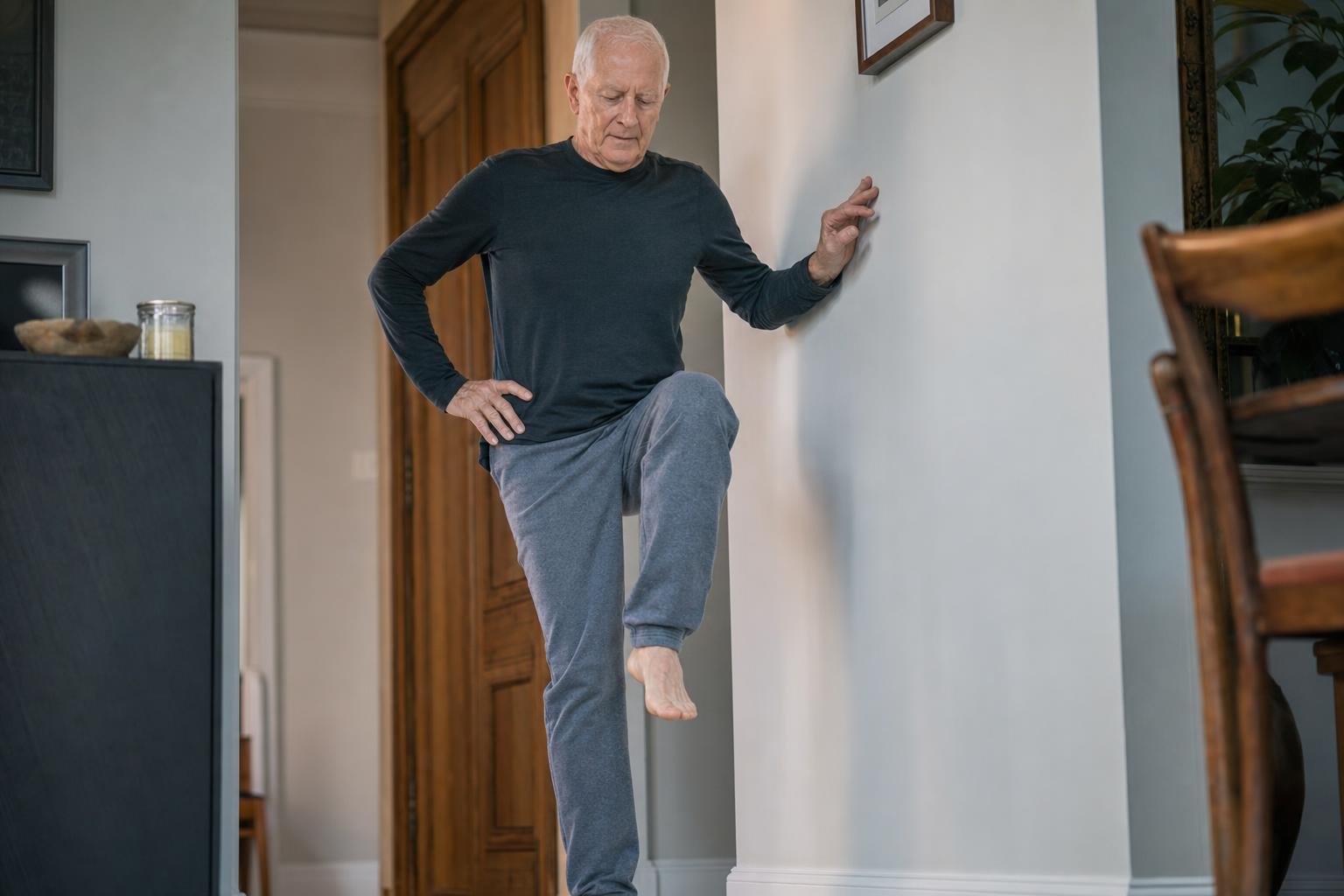
Standing and Single-Leg Exercises
Most falls happen because the ankle and knee fail to detect a surface change fast enough. These exercises retrain those sensors directly.
- Single-leg stand: Stand near a wall. Lift one foot slightly off the floor. Hold 10 to 30 seconds per side. This fires the proprioceptive sensors in your ankle and knee, the exact sensors that catch you during a misstep.
- Heel-to-toe tandem walk: Place one foot directly in front of the other, heel touching toe. Walk 20 steps. This challenges your vestibular system and gaze control at the same time, which is what your brain uses to track movement through space.
- Standing calf raises: Rise up on your toes 10 to 15 times. Ankle weakness is the first sign of fall risk. This exercise directly rebuilds that stability.
- Side leg raises: Stand behind a chair, lift one leg out to the side 10 times per side. Strong hip abductors keep your pelvis level with every step you take.
Walking-Based Balance Drills
Casual walking is good for your heart. It does not fix balance. Structured walking drills challenge different movement systems and produce real gains.
- Backward walking: Walk slowly backward for 10 to 15 steps. This activates proprioceptors that forward motion never uses.
- Side-stepping: Step sideways across a room, 10 steps each direction. This builds lateral reaction speed.
- Obstacle-course walking: Place a few household items on the floor and step around or over them. This trains your reaction time in a safe environment.
If you prefer outdoor drills, the Four Mile Run Trail and the Mount Vernon Trail both offer flat, predictable terrain that works well for practicing these walking patterns. Stick to level stretches when you are first building confidence.
Strength Training Movements That Support Stability
Lower-body strength is the single strongest predictor of fall risk in older adults. Weak legs mean slow reactions and poor recovery when you start to tip.
- Chair squats (sit-to-stand): Sit at the edge of a chair and stand up using your legs, not your hands. Repeat 10 times. This builds the quad and glute strength you need on every staircase.
- Wall sits: Slide your back down a wall until your knees are at roughly a 90-degree angle. Hold 20 to 30 seconds. This builds the sustained leg strength your body needs to stay stable mid-stride.
- Resistance band leg curls and extensions: A simple resistance band adds progressive load without equipment. Start light and add resistance as your strength builds.
Start these movements slowly. If you have had a recent injury or surgery, check with our team before beginning. We offer injury rehabilitation services in Alexandria for patients who have been hurt while exercising or recovering from a prior fall. Our team can guide you through the safest starting point based on your current condition.
Want a personalized balance exercise plan? Our team is ready to help. Call us or schedule a visit at our Northern Virginia office to get started.
How Chiropractic Care and Physical Medicine Address the Root Cause of Balance Problems
Exercises help. But if your nervous system is not sending accurate signals, no amount of practice fully fixes the problem. That is where clinical care makes the difference. A root-cause approach looks at why your balance system is failing, not just the symptoms you feel.
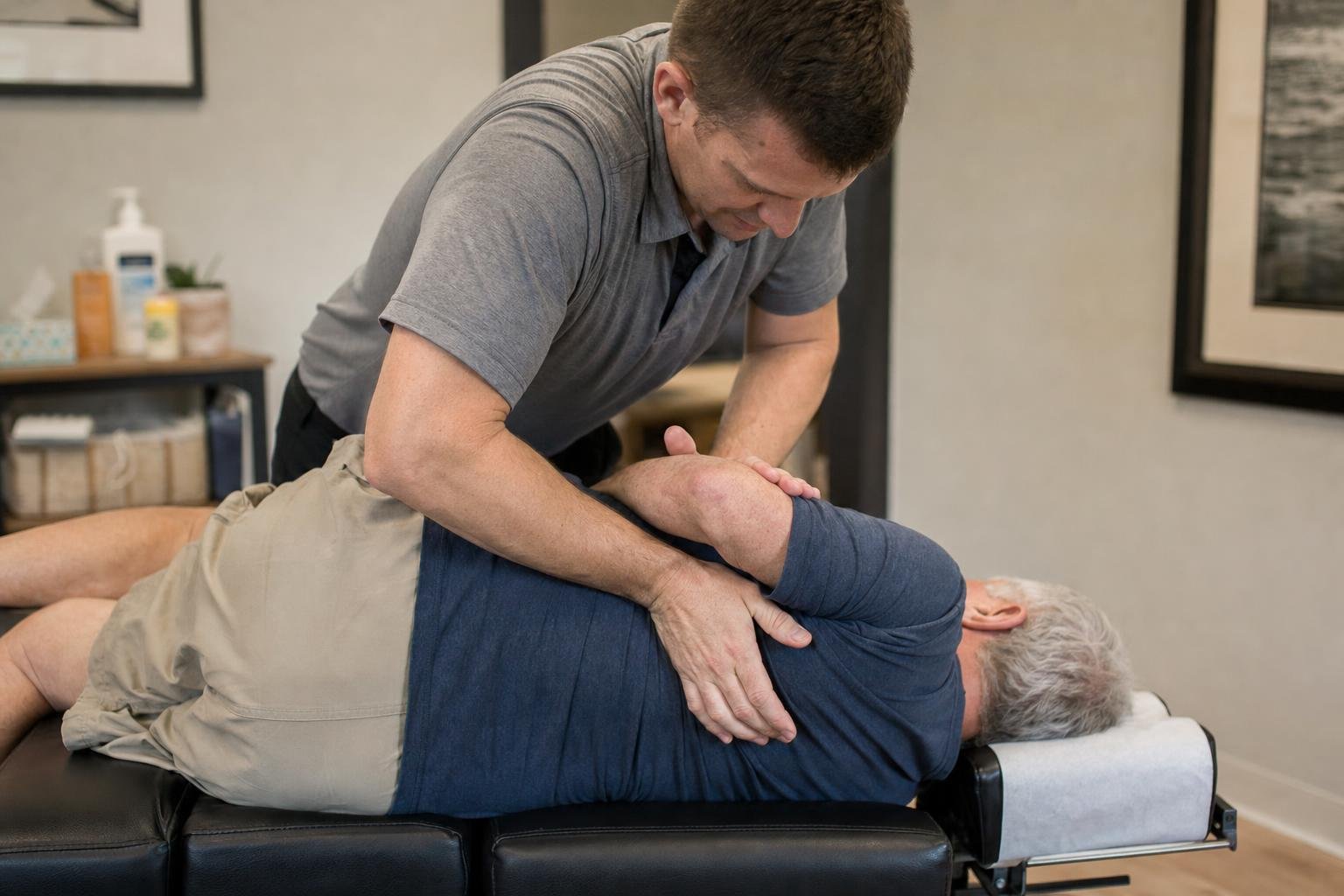
Spinal Adjustments and Proprioceptive Reset
Your spine houses the nerve pathways that carry position signals from your feet and legs to your brain. When vertebrae shift out of alignment, those signals get distorted. You react slower. Your footing feels uncertain. Manual chiropractic adjustments and intersegmental traction restore proper vertebral alignment so proprioceptive signals travel more accurately. This is not symptom management. It targets the actual source of the disruption.
Dr. Cassou and Dr. Gyzel build individualized care plans based on your specific alignment findings and movement patterns. There is no fixed timeline. Treatment moves at your pace and adjusts as your balance improves. This is what separates clinical chiropractic for balance problems from generic exercise advice.
- Spinal manipulation to restore vertebral positioning
- Intersegmental traction to decompress nerve pathways
- Gait and posture assessment to guide adjustments
- Strength training support to reinforce spinal stability
Dry Needling and Soft Tissue Work for Stability
Sedentary older adults develop tight, shortened muscles in the hips, glutes, and calves. These muscles fire slowly. When you stumble, the delay in muscle response is often what turns a wobble into a fall. Dry needling releases trigger points in exactly these muscle groups, restoring length and improving how fast your body corrects itself.
Soft tissue work also improves circulation and nerve conduction in the lower legs. Better muscle response time is a direct, measurable improvement in fall prevention. Read more about how we address related nerve conditions on our chiropractic and neuropathy care page.
Laser Therapy and Peripheral Neuropathy Treatment
Peripheral neuropathy is one of the most common and most overlooked causes of balance loss in diabetic and older patients. When feet lose sensation, the brain stops receiving accurate feedback from the ground. Falls follow. Our cutting edge MLS Laser Therapy uses multi-wave locked system energy to reduce nerve inflammation and restore sensation in the feet and lower legs. Better sensation means better balance feedback.
This same neurological care approach applies to other conditions affecting the nervous system. Just as we address chiropractic care for migraines by targeting nerve function, laser therapy works by reducing inflammation at the nerve level rather than masking the problem. Non-surgical solutions like this are effective for patients who want drug-free options.
What Falls Actually Cost Alexandria Seniors and When to Seek Professional Help
The Real-World Consequences of a Fall
Falls are the leading cause of fatal and non-fatal injuries in adults 65 and older, according to the CDC. A single fall can mean a hip fracture, a hospital stay, and months of rehabilitation. Many people never fully return to their previous level of independence after that kind of injury.
The fear of falling creates its own problem. When you pull back from activity to stay safe, your muscles weaken and your balance gets worse. That increases your actual fall risk. It is a cycle that feeds itself, and it is one we see frequently in patients from Falls Church, Manassas, and Woodbridge. Older neighborhoods in Del Ray, Rosemont, and the West End add extra daily hazards, including uneven brick sidewalks and interior stairs in older townhomes and apartment buildings.
Simply put, a fall can change everything.
Warning Signs Your Balance Needs Clinical Attention
Not every balance issue requires a doctor visit. But some warning signs point to an underlying problem that exercises alone will not fix. If you recognize any of these, a clinical evaluation makes sense.
- Numbness or tingling in your feet or toes
- Dizziness or lightheadedness when you stand up
- Feeling unsteady on stairs or uneven ground
- A recent fall or a near-miss in the past six months
- Difficulty walking in a straight line without watching your feet
- Loss of confidence during routine activities like walking to the car
- Weakness in your ankles or legs that has gotten worse over time
Numbness or tingling in the feet can signal peripheral neuropathy, a nerve condition that directly affects your ability to sense the ground beneath you. That is a clinical issue, not something a balance exercises routine will resolve on its own.
If you recognize two or more of these warning signs, a clinical evaluation is the right next step. Our team has helped patients in Falls Church, Manassas, and Woodbridge regain stability through individualized care plans that address balance at its root cause. Virginia Family Chiropractic & Physical Medicine has been serving Northern Virginia since 2008. Visit us at 50 S Pickett St STE 114, Alexandria, VA 22304, or request an appointment online at virginiafamilychiropractic.com. Call your nearest location directly, as each office maintains its own phone line. You do not have to accept unsteady footing as a normal part of aging.
Frequently Asked Questions
How Long Does It Take to See Improvement in Balance With Chiropractic Care?
Most patients at Virginia Family Chiropractic & Physical Medicine notice measurable improvements in stability within four to eight weeks of consistent care, though timelines vary based on the underlying cause and severity of the balance issue. Patients with mild proprioceptive disruption often respond faster than those managing peripheral neuropathy or chronic spinal degeneration. Your provider will reassess your progress at follow-up visits and adjust your treatment plan accordingly.
Is It Safe to Do Balance Exercises If I Have Osteoporosis?
Balance and strength exercises are generally recommended for people with osteoporosis because they help reduce fall risk, which is the primary danger associated with low bone density. However, high-impact movements and certain forward-bending positions should be avoided without clearance from a provider. Virginia Family Chiropractic & Physical Medicine can design a modified exercise program that improves stability without placing unsafe stress on fragile bones.
Can Poor Vision Be a Factor in My Balance Problems?
Yes, vision is one of the three sensory inputs your body relies on for balance, so even mild vision changes can contribute to unsteadiness, particularly in low-light environments. If your balance problems seem worse in the dark or on uneven terrain, a combination of visual, vestibular, and musculoskeletal factors may all be involved. A clinical evaluation can help determine which systems are contributing most so treatment addresses the correct root cause.
Will I Need to Come In Every Week Indefinitely for Balance Treatment?
Most treatment plans at Virginia Family Chiropractic & Physical Medicine are structured in phases, starting with more frequent visits and tapering as your condition stabilizes and your home exercise routine becomes effective. Many patients transition to periodic maintenance visits once their balance goals are met. The goal is to equip you with tools and movement habits that reduce your long-term dependence on clinical visits.
Does Medicare or Insurance Cover Balance-Related Chiropractic and Physical Medicine Visits?
Medicare Part B covers chiropractic adjustments that are deemed medically necessary, and many private insurance plans also cover physical medicine services when there is a documented functional deficit such as a balance disorder. Coverage for additional services like dry needling or laser therapy varies by plan and carrier. Virginia Family Chiropractic & Physical Medicine recommends calling your insurance provider directly and asking whether a referral is required before your first visit.
Can Medications Cause or Worsen Balance Problems in Older Adults?
Yes, several common drug categories including blood pressure medications, sedatives, antihistamines, and certain antidepressants are known to impair balance or cause dizziness as a side effect. If your unsteadiness began or worsened after a medication change, that information is important to share during your clinical intake. A provider at Virginia Family Chiropractic & Physical Medicine can coordinate with your prescribing physician if medication-related dizziness appears to be a contributing factor.
At What Age Should I Start Proactively Working on My Balance?
Proprioceptive sensitivity and muscle reaction time begin declining as early as the late 40s, so starting balance-focused exercise and periodic spinal evaluations before symptoms appear is genuinely worthwhile. Waiting until after a near-fall or stumble means you are already operating with a reduced margin of safety. Adults in their 50s who build balance habits early tend to maintain independence and mobility well into their 70s and beyond.
Ready to Get Started with Virginia Family Chiropractic & Physical Medicine?
Call Each location has its own number (WhatConverts DNI active) to speak with our team directly. We're ready to answer your questions, walk you through your options, and help you find the right solution for your needs. Whether you're just starting to plan or ready to move forward, we'll make the process simple and stress-free.
Reach out today and let's talk about how we can help.