

Running on the Mount Vernon Trail or logging miles through Del Ray feels great until an overuse injury stops you cold. Running injury prevention is not just about stretching before a run. It takes a root-cause approach that looks at how you move, how your body absorbs impact, and where small problems are building into bigger ones.
Virginia Family Chiropractic & Physical Medicine has worked with Alexandria runners since 2008, offering drug-free, non-surgical solutions that address injuries before they sideline your training.
Key Takeaways
- Most common running injuries are overuse injuries that build gradually and are preventable with early intervention.
- Running injury prevention works best when it addresses movement patterns, not just pain symptoms after they appear.
- Hard surfaces like asphalt and concrete increase impact stress on knees, feet, and the IT band with every mile.
- Chiropractic care and physical medicine treat and prevent running injuries without medication.
- Alexandria runners training for fall races face the highest injury risk during aggressive mileage increases in late summer.
Training for the Marine Corps Marathon? Logging miles along the Potomac and starting to feel that ache in your knee or soreness in your heel? You are not alone. We see Alexandria runners every week dealing with the exact same thing.
The most common running injuries, the training and movement patterns that cause them, and drug-free steps to help you stay healthy and keep running are covered below, including guidance on when to get evaluated before a minor problem becomes a chronic one.
Virginia Family Chiropractic & Physical Medicine has worked with runners across Northern Virginia since 2008, serving patients in Alexandria, Falls Church, Manassas, and Woodbridge. Our team offers chiropractic rehabilitation for runners and conservative care built around your specific training goals.
The Most Common Running Injuries Alexandria Runners Face
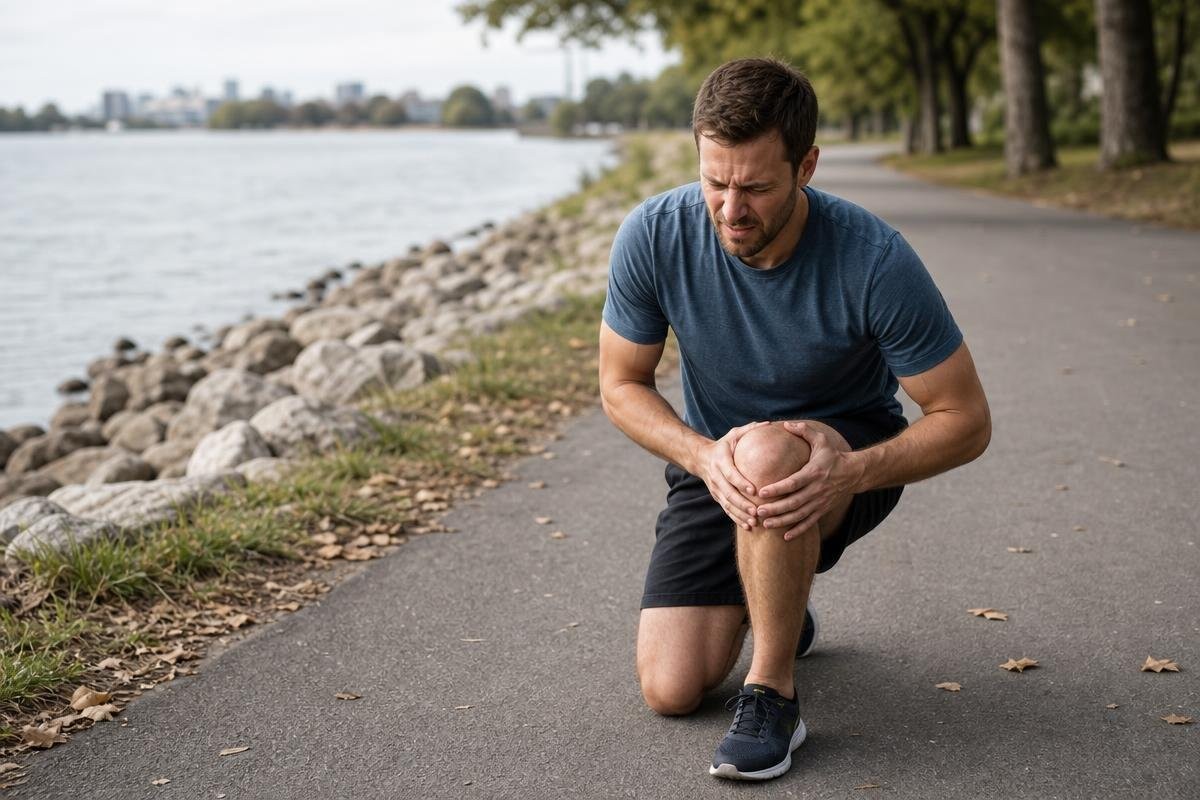
Most running injuries don't happen from a single bad step. They build up over weeks of training on hard pavement, cambered roads, and trails. If you're logging miles along the Potomac or pushing your mileage for a fall goal race, knowing what to watch for can stop a small problem from becoming a serious one.
Runner's Knee (Patellofemoral Pain Syndrome)

Runner's knee is pain behind or around the kneecap caused by repetitive stress on the patellofemoral joint. It happens when mileage increases too fast or when you're running on cambered road surfaces in Del Ray or Old Town. You'll feel it most on downhill sections or after sitting for a long stretch. Our team provides chiropractic rehabilitation for runners dealing with this kind of knee pain.
Plantar Fasciitis
Plantar fasciitis is inflammation of the thick band of tissue running along the bottom of your foot. Tight calves, overpronation, or a sudden mileage spike are the usual causes. The hallmark sign is sharp heel pain on your first steps out of bed in the morning. If that sounds familiar, read about how chiropractic care can help plantar fasciitis before it worsens.
IT Band Syndrome
The iliotibial band runs from your hip down to your outer knee. When it rubs repeatedly against the femoral condyle, it becomes inflamed. You feel it as lateral knee or hip pain that gets sharper on downhill sections. The cambered road surfaces common in Northern Virginia neighborhoods put extra stress on this band with every stride.
Shin Splints
Shin splints, formally called medial tibial stress syndrome, cause a dull ache along the inner edge of the shin bone that usually eases once you stop running. They're most common in new runners or anyone returning after a training gap. Here is the distinction that matters: pain that persists at rest or wakes you at night is a red flag for a stress reaction or stress fracture, not ordinary shin splints.
Runners who push through localized shin pain for two to three weeks are the ones who tend to progress to a fracture. This is one of the most common running injuries we see in runners ramping up mileage in August and September.
Schedule your running evaluation
Why Alexandria's Routes Demand a Different Approach to Running Injury Prevention
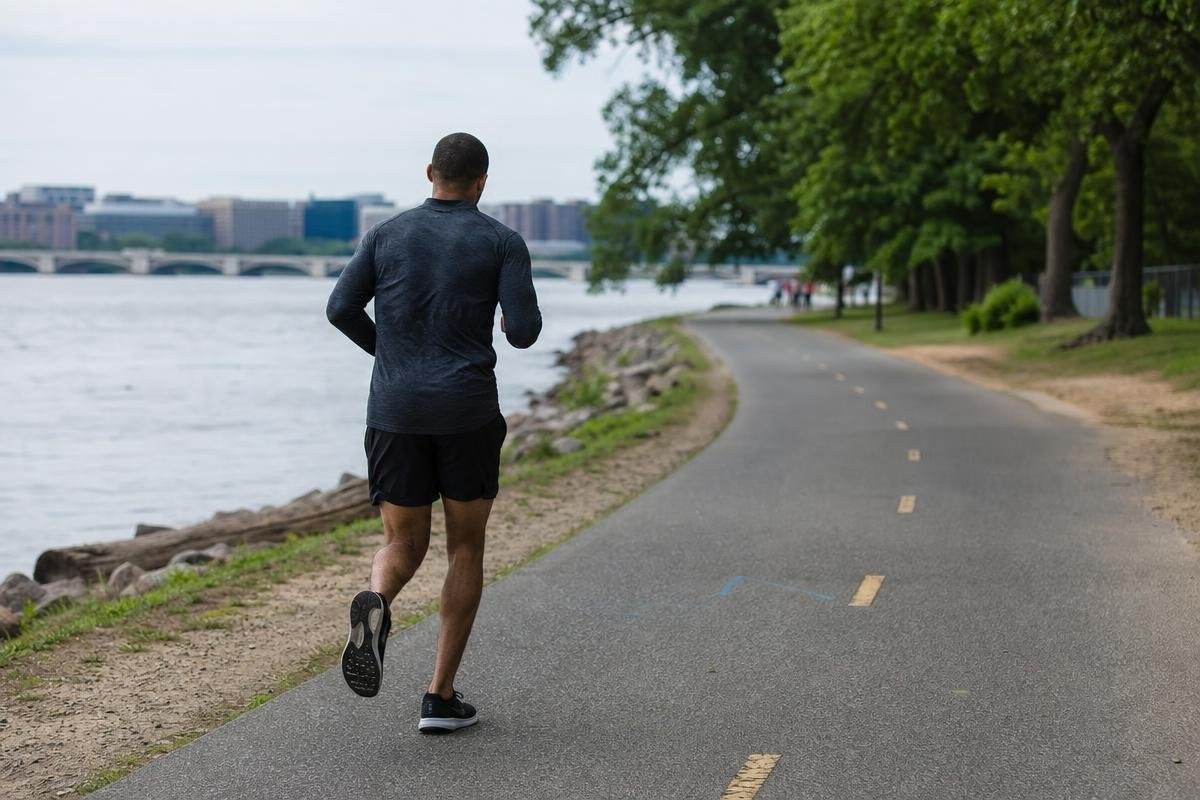
The trails and streets here look inviting. But the surfaces, terrain, and seasonal conditions in Northern Virginia create specific injury risks that generic running advice never addresses.
Hard Pavement and Cambered Surfaces
Yes, running on the Mount Vernon Trail does increase your injury risk. The 18-mile paved route along the Potomac is asphalt from end to end. Asphalt and concrete transmit significantly more impact force to your knees, hips, and lower back than soft trail surfaces do. The same is true for street running in Old Town and Del Ray.
Cambered road surfaces add another layer of risk. Roads are slanted for drainage, which causes your downhill foot to pronate excessively on every stride. Over miles, that repetitive stress loads the IT band and plantar fascia unevenly.
Seasonal Conditions and Race-Season Mileage Spikes
Northern Virginia summers are hot and humid. Heat accelerates muscle fatigue and raises your overuse injury risk on every run. Winter brings the opposite problem: cold stiffens muscles and icy patches alter your gait in ways that strain the lower back and hips.
The most dangerous window for many local runners is August and September. Runners chasing an October goal race frequently spike their weekly mileage during this period. That aggressive ramp is the primary driver of the shin splints and stress fractures we see before fall race season. Your body needs time to adapt, and mileage increases beyond 10 percent per week during peak training are a reliable path to injury.
Training Habits That Reduce Your Risk of Running Injuries
Most running injuries are not accidents. They are the result of doing too much, too soon, with too little recovery. The good news is that the right training habits are one of the most effective tools for running injury prevention you have.
The 10 Percent Rule for Weekly Mileage
Never increase your weekly mileage by more than 10 percent from one week to the next. If you ran 20 miles this week, cap next week at 22 miles. That is it. Crossing that threshold is the leading cause of shin splints, stress fractures, and IT band syndrome.
Rest Days and Cross-Training
Rest days are not optional. They are when your body repairs the micro-damage that running creates. Skip them regularly and that micro-damage becomes a chronic pain pattern. Cross-training fills the gap. Swimming, cycling, and strength work keep your cardiovascular fitness up without repeating the same repetitive impact.
Dynamic Warm-Up Before Every Run
Static stretching before a run can actually increase your injury risk. Cold, tight muscles do not respond well to being held in a stretch. Save static stretching for after your run. Before you head out, do a dynamic warm-up instead.
Spend 5 to 10 minutes on movements that raise your heart rate and activate the muscles you are about to use:
- Leg swings (forward and lateral)
- Hip circles
- Walking lunges
- High knees
- Ankle circles
Gear, Footwear, and Movement Patterns That Protect Runners
The right shoe and clean movement mechanics do more to prevent running injuries than almost any other factor. Runners logging miles on the hard asphalt of the trail or the cambered streets of Del Ray need gear matched to their foot type and surface. Get this wrong and plantar fasciitis, shin splints, and knee pain follow quickly.
Choosing the Right Running Shoe
Running shoes lose meaningful shock absorption after 300 to 500 miles. A worn midsole that looks fine on the outside is already failing at impact protection. That breakdown is a direct contributor to plantar fasciitis in runners and stress-related knee pain.
Foot type matters just as much as mileage. Neutral arches, overpronation, and supination each need different support structures. Runners training on pavement-heavy routes benefit from extra cushioning in the midsole. Get a gait analysis at a specialty running store before your next shoe purchase.
Correcting Faulty Movement Patterns
Bad running form places abnormal stress on joints with every stride. Common faults we see in runners include:
- Overstriding (foot landing far ahead of the center of mass)
- Hip drop, also called Trendelenburg gait
- Excessive forward trunk lean
- Knee valgus (knees collapsing inward on impact)
A board-certified chiropractor can assess these patterns directly and prescribe corrective exercises. Our team uses evidence-based methods to evaluate spinal alignment and running mechanics together.
How to Treat Running Injuries Before They Become Chronic
When to Stop Running and Seek Care
Normal post-run soreness is diffuse, fades within 24 to 48 hours, and does not change how you move. Injury pain is different. Stop running and get evaluated if you notice any of these warning signs:
- Sharp or localized pain that worsens during activity
- Pain that persists more than three days without improving
- Swelling, bruising, or visible inflammation around a joint
- Any change in your gait or a noticeable limp
- Pain that forces you to compensate with the opposite leg
Hands-On, Non-Surgical Treatment Options
Our team uses several conservative approaches to get runners back on the road, not just out of pain.
- Shockwave Therapy. Delivers acoustic pulses directly into damaged tissue. Especially effective for plantar fasciitis. Learn more about shockwave therapy for running injuries.
- MLS Laser Therapy. Reduces inflammation and promotes tissue repair at the cellular level. See how MLS laser therapy works for knee pain and soft tissue injuries.
- Dry Needling. Releases trigger points in overworked muscles, including the IT band, calves, and hip flexors.
- Chiropractic Rehabilitation. Addresses the root cause of the injury and rebuilds the strength needed to prevent recurrence.
Strength and Mobility Work That Keeps Runners Healthy
Most runners log their miles but skip the gym. That's a problem. Weak glutes, hip abductors, and core muscles force your knees and ankles to compensate, and that compensation is exactly what causes IT band syndrome, runner's knee, and shin splints. Two dedicated strength sessions per week can meaningfully reduce your overuse injury rate.
Key Muscle Groups Every Runner Should Strengthen
- Single-leg deadlifts: glute and hamstring strength
- Clamshells: hip abductor activation
- Side-lying hip abduction: lateral hip stability
- Planks and dead bugs: core stability without spinal load
- Step-downs: quad strength and knee control
Mobility Drills That Protect Running Mechanics
Tight hip flexors, calves, and a stiff thoracic spine restrict normal movement patterns and raise your injury risk with every stride. Mobility work is not optional. It is part of how to prevent running injuries before they start.
- Couch stretch: hip flexor length
- Calf and Achilles stretch: ankle mobility and plantar fascia protection
- Thoracic spine foam rolling: upper back extension
- Pigeon pose: hip external rotation
- Ankle circles: joint mobility and proprioception
Frequently Asked Questions
How do I know if my pain is soreness or an injury?
Normal soreness is diffuse and shows up 24 to 48 hours after a hard effort. It usually improves once you warm up and move around. Injury pain is different. It is sharp, localized, and tends to worsen during or after your run. If your pain is changing your stride, stop running and get evaluated.
How long does it take to recover from common running injuries?
Shin splints often resolve in 2 to 6 weeks with proper rest and load management. Plantar fasciitis is slower, sometimes taking 3 to 6 months without targeted treatment. Runners training toward a fall race goal can shorten that timeline significantly with shockwave therapy for running injuries or dry needling, both of which accelerate tissue healing.
Can a chiropractor actually help with running injuries?
Yes. Chiropractors trained in physical medicine assess the biomechanical root cause, not just where it hurts. Our team uses chiropractic adjustments for runners, soft tissue therapies, and individualized rehabilitation exercises to address what is actually driving your pain.
What is the most common running injury?
Runner's knee, also called patellofemoral pain syndrome, is among the most frequently reported common running injuries. Strengthen your glutes and quads, avoid sudden mileage increases, and correct hip drop or overstriding to reduce your risk.
Is it safe to keep running with mild pain?
Running through mild, non-changing discomfort is sometimes acceptable. Running through pain that alters your gait or gets worse during a run is not. Pushing through that kind of pain typically prolongs recovery, not shortens it.
Where can Northern Virginia runners get evaluated for a running injury?
Our office is located at 50 S Pickett St STE 114, Alexandria, VA 22304. We have been treating sports injuries and providing sports injury rehabilitation in the area since 2008. Our team builds individualized care plans that combine chiropractic care, targeted rehabilitation, and advanced therapies. Visit our page for a chiropractor in Alexandria to learn more or book your evaluation.
Ready to run without pain? Our team is ready to assess your injury, identify the root cause, and build a plan that gets you back on the road.