
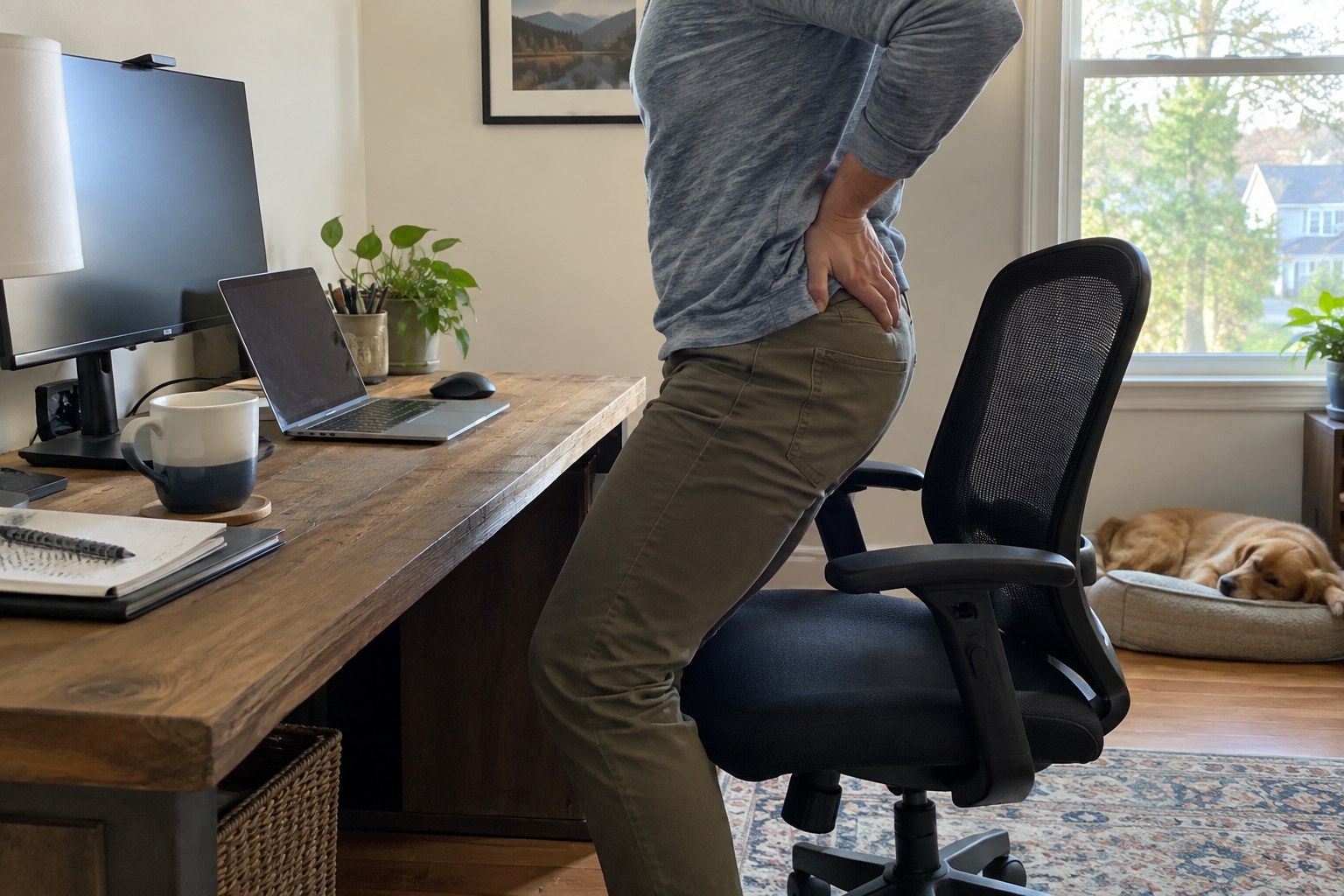
Hip pain after sitting can make the first steps after a meeting, commute, or meal feel stiff or uncomfortable. The hip area includes the joint, nearby muscles and tendons, and structures in the lower back, so the place you feel pain does not always reveal where it starts. Northern Virginia adults who notice a recurring pattern can track what triggers it, where it is felt, and whether it improves or worsens with movement.
If hip discomfort is affecting your routine, Virginia Family Chiropractic & Physical Medicine can help you understand the next step. Contact the team or call the office nearest you: Alexandria at (703) 370-5300, Falls Church at (703) 538-3830, Manassas at (703) 367-7878, or Woodbridge at (703) 499-8840.
Key Takeaways
- Pain after sitting is a symptom pattern, not a diagnosis; discomfort may come from the hip joint, surrounding tissues, or another area such as the lower back.
- The location of pain, recent activity changes, and whether stairs, walking, or getting up also trigger symptoms are useful details to record.
- Changing position and taking comfortable movement breaks may help reduce prolonged pressure, but do not force stretches or movements that increase pain.
- Arrange an evaluation for persistent or worsening pain, limping, or difficulty with daily activities.
- Sudden severe pain after an injury, inability to move the hip or bear weight, or fever or rash with hip symptoms needs prompt medical attention.
What People Mean by Hip Pain After Sitting
People use the phrase hip pain for discomfort in several nearby places: the groin, outside of the hip, buttock, upper thigh, or even the lower back. The hip joint connects the thigh bone to the pelvis, but muscles, tendons, bursae, and nerves also affect movement around it. The Cleveland Clinic overview of hip pain explains that pain may be felt on the surface, deeper in the joint, or in the lower back.
After a long period in a chair, you may notice an ache when standing, a pinching feeling with the first few steps, or pain that gets stronger the longer you sit. Some people feel better after moving; others find walking or climbing stairs makes symptoms worse. These differences can help a clinician understand your experience, but they do not identify a specific condition.
Hip pain after sitting can reflect an irritated tendon or bursa, joint stiffness, an injury, arthritis, or pain referred from the back. Less commonly, a structural issue such as femoroacetabular impingement may be considered. Do not use a chart or online description to diagnose yourself; a healthcare professional considers the history and exam together.
Where the Discomfort Is Felt Can Offer Clues
Pain location is a helpful observation, not a diagnosis. Groin discomfort can be associated with structures inside the hip joint, while pain on the outer side may involve nearby soft tissues. Buttock or back-of-hip discomfort can overlap with lower-back or pelvic symptoms. A clinician may ask you to point with one finger to the area and explain whether the pain travels.
| Area you notice | Useful context to track | Why an exam still matters |
|---|---|---|
| Front of hip or groin | Does sitting, bending, or getting into a car change the discomfort? | Hip-joint and nearby causes can feel similar. |
| Outer side of hip | Is lying on that side, walking, or climbing stairs uncomfortable? | Several tissues around the outside of the hip can be involved. |
| Buttock or back of hip | Does the sensation also reach the lower back or leg? | Pain may be referred from another area, including the back. |
| Upper thigh or knee area | Does the symptom change with standing, walking, or a position change? | Pain can be felt away from its source, so location alone is not conclusive. |
The U.S. National Library of Medicine's MedlinePlus hip pain reference lists several possible sources, including joint conditions, muscle strains, bursitis, and pain referred from the back. That range is one reason not to assume that discomfort after sitting always means a tight muscle or a problem with the hip joint.
How Sitting Position and Daily Routines May Affect Symptoms
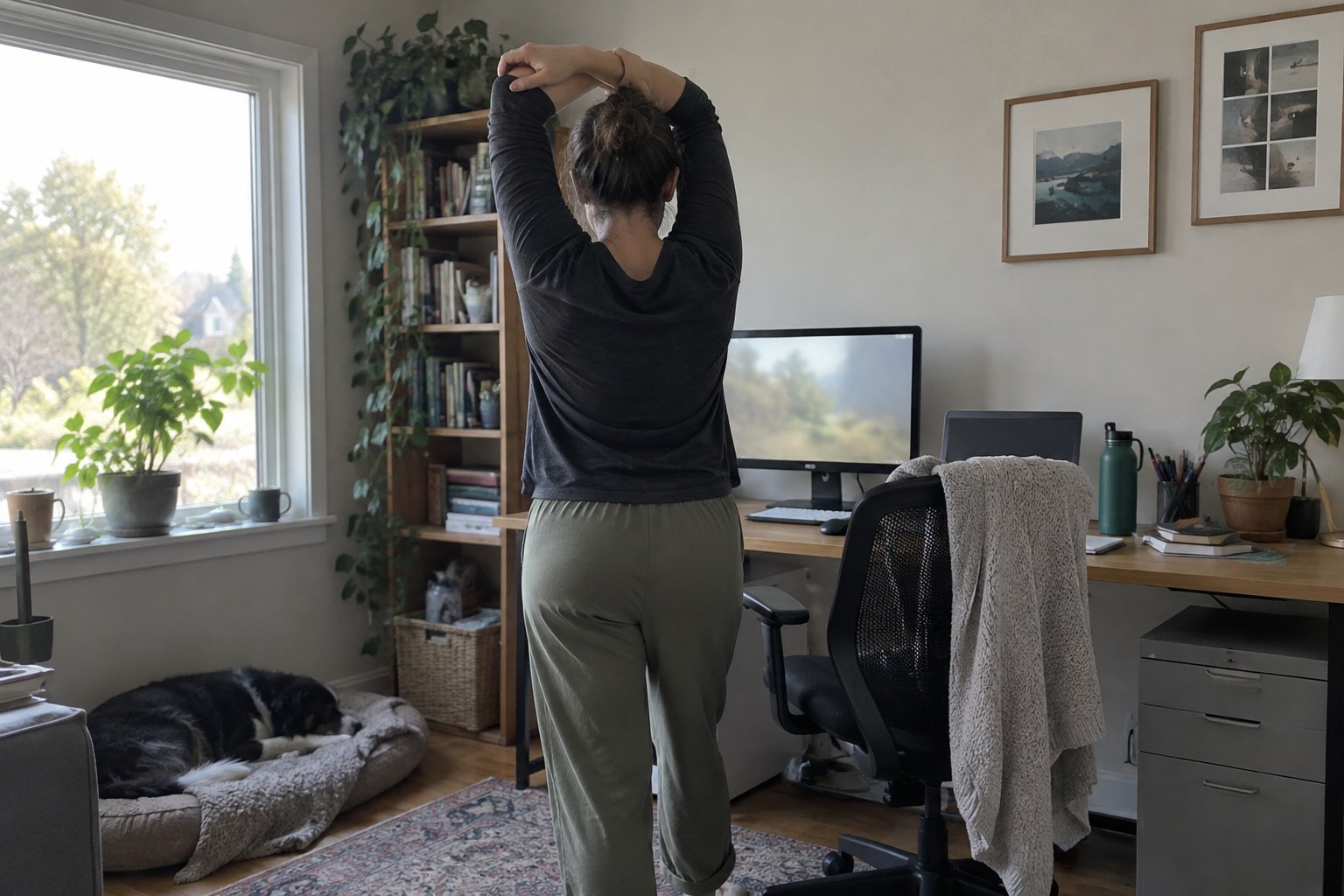
Staying in one position for a long time can make an existing sensitive area feel more noticeable when you stand. A low chair, a prolonged drive, crossed legs, or sitting with one hip turned can change how your body is loaded. These factors may aggravate discomfort for some people, but they do not explain every case. The Cleveland Clinic's information on femoroacetabular impingement notes that prolonged sitting can worsen symptoms for some people with that condition; it is not a way to identify that condition yourself.
A practical experiment is to break up long sitting periods when your schedule allows. Stand, shift your weight, or take a short comfortable walk. If a movement makes pain sharper or causes symptoms to spread, stop and return to a comfortable position. The goal is not to force a stretch or prove that the hip is fine. It is simply to notice whether changing position affects your symptoms.
Review the chair and desk setup as well. A seat that allows your feet to rest comfortably and keeps your knees from being held far above your hips may feel easier for some people. You can also vary sitting and standing tasks instead of remaining in one posture. If discomfort continues despite routine changes, or movement is becoming harder, contact a healthcare professional.
When to Get Hip Pain Evaluated
Schedule an appointment if hip pain after sitting keeps returning, lasts more than several days without improvement, disrupts work or sleep, or makes it difficult to walk, climb stairs, or get in and out of a car. Also seek advice if you are limping or symptoms are steadily worsening. A provider can assess the hip, back, gait, strength, and range of motion and decide whether imaging or referral is needed.
Seek urgent medical attention after a serious fall or other trauma, for a visible deformity, severe bruising or bleeding, or if you cannot move the hip or bear weight. The MedlinePlus hip pain reference also advises contacting a healthcare professional when hip pain comes with fever or a rash. Do not assume a sitting position explains severe or rapidly worsening symptoms.
Urgent symptoms deserve attention regardless of whether sitting seems to trigger them. If you have a known condition that affects your bones or immune system, a recent surgery, or another significant health concern, ask your healthcare professional how quickly you should be seen.
What a Hip Pain Appointment May Include
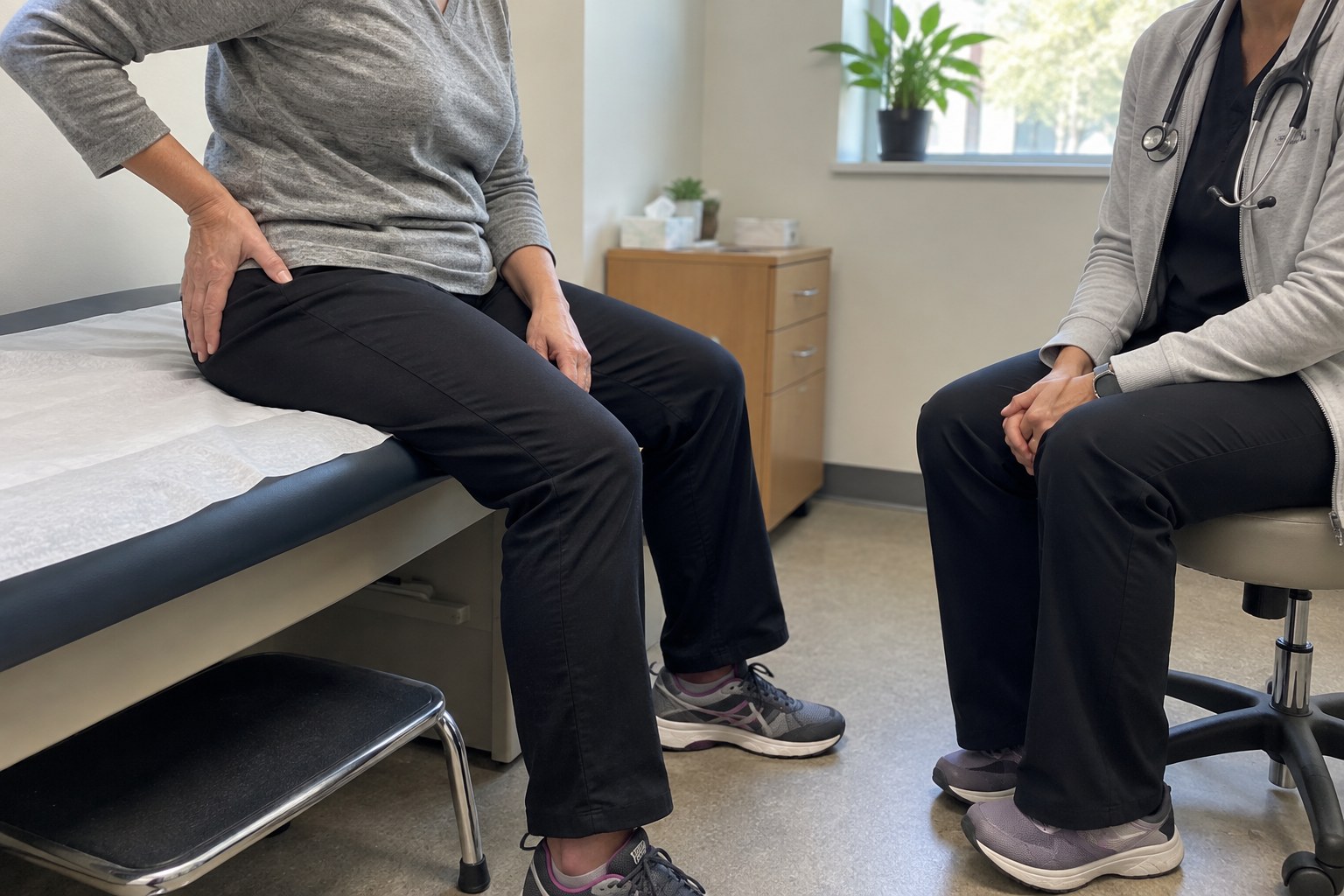
A clinician will usually ask where the pain is, when it began, whether there was an injury, and which activities make it better or worse. They may ask about your sitting routine, walking, exercise, sleep, medical history, and any symptoms in your back or leg. An exam can include checking how you stand and walk, moving the hip, and assessing strength and tenderness.
Depending on what the history and exam show, a provider may recommend observation, changes to activity, guided rehabilitation, imaging, or another referral. The right approach depends on the source of symptoms, not simply on the fact that they follow sitting. Ask why a test or treatment is being recommended, what improvement to watch for, and when to follow up.
Virginia Family Chiropractic & Physical Medicine lists chiropractic and rehabilitation services for Northern Virginia. Its rehabilitation services page describes its approach, but only an individual evaluation can establish whether that service is appropriate for you. If you are unsure where to start, a primary care clinician can help direct your next step.
A Simple Plan for Your Next Workday
For the next few workdays, jot down when discomfort begins, how long you have been sitting, where you feel it, and what happens after you stand. Note whether stairs, walking, leaning forward, or turning your leg change the symptoms. Add any recent changes in exercise, commuting, footwear, or workload. This record is more useful than repeatedly trying random stretches.
If you have no urgent symptoms, take comfortable position changes as your schedule allows. Avoid movements that increase pain, and do not start strenuous exercise to test the hip. If the problem persists, becomes more intense, or affects walking and daily tasks, arrange an evaluation. Seek urgent care for severe or sudden symptoms, fever with a hot swollen hip, or inability to bear weight after an injury.
For current clinic details or to request an appointment, use the office locations page or contact page. The Alexandria office can also be reached at (703) 370-5300.
About Virginia Family Chiropractic & Physical Medicine
Virginia Family Chiropractic & Physical Medicine serves Northern Virginia from four offices in Alexandria, Falls Church, Manassas, and Woodbridge. The practice website lists chiropractic, physical medicine, and rehabilitation services. Because hip symptoms can originate in different structures, an individualized evaluation is important before deciding which type of care is appropriate. Visit the practice website for current office and service information.
Frequently Asked Questions
Why does my hip hurt after sitting for a long time?
Several things can cause discomfort after prolonged sitting, including a position that aggravates sensitive tissues, a joint or tendon issue, or pain referred from the lower back. The timing alone does not identify the cause. Note where you feel pain, what positions trigger it, and whether it changes when you stand or walk.
Can sitting cause hip pain?
Sitting for a long time may aggravate symptoms in some people, but it is not the only possible explanation for hip pain. An existing joint, tendon, bursa, or back problem may become more noticeable after staying still. If pain is persistent, worsening, or limiting activity, seek an evaluation rather than assuming posture is the only cause.
What does hip pain from sitting usually feel like?
People describe an ache, stiffness, or pinching when they stand after sitting, but experiences vary. Discomfort may be felt in the groin, outer hip, buttock, upper thigh, or lower back. Those locations can offer context, but they cannot confirm a diagnosis without considering the person's history and an examination.
Should I stretch if my hip hurts after sitting?
Do not force a stretch that makes pain sharper or causes it to spread. A gentle position change or short comfortable walk may be reasonable if it does not worsen symptoms, but it is not a substitute for assessment when pain persists. Ask a clinician what movement is appropriate for your specific symptoms and health history.
When is hip pain an emergency?
Seek urgent care for sudden severe pain, a hot swollen hip, fever or feeling unwell with hip symptoms, a serious fall, visible deformity, or inability to bear weight after an injury. If symptoms are concerning or rapidly worsening, contact local emergency services or a clinician rather than waiting to see if a desk adjustment helps.
Could hip pain after sitting come from my back?
Yes, discomfort felt around the hip or buttock can sometimes be referred from the lower back or another nearby structure. Tingling, numbness, or pain traveling down the leg is important to mention. A healthcare professional can evaluate the pattern and decide whether the source is the hip, back, or another area.
This information is for general education and cannot diagnose hip pain. Hip pain after sitting can have different sources, so pay attention to its location, triggers, and effect on walking or daily tasks. Virginia Family Chiropractic & Physical Medicine has offices across Northern Virginia; check the locations page or call (703) 370-5300 to ask about scheduling. For sudden severe pain or inability to bear weight after an injury, seek urgent care.
Ready to Talk With Virginia Family Chiropractic?
Virginia Family Chiropractic & Physical Medicine serves Northern Virginia from offices in Alexandria, Falls Church, Manassas, and Woodbridge. To ask about an appointment, call Alexandria at (703) 370-5300, Falls Church at (703) 538-3830, Manassas at (703) 367-7878, or Woodbridge at (703) 499-8840, or use the contact page.