Dealing with chronic back pain, nerve pain, or a slow-healing sports injury? Cold laser therapy is a treatment that triggers cellular repair without needles, medication, or downtime. At Virginia Family Chiropractic & Physical Medicine, our board-certified team has been delivering individualized pain relief to Alexandria patients since 2008. Whether you work long desk hours near Carlyle or push hard along the Potomac waterfront, we can help you get back to feeling like yourself.
Key Takeaways
- Cold laser therapy uses low-level light energy to stimulate healing in damaged tissue without surgery or medication.
- It is a proven option for back pain, neuropathy, arthritis, and sports injuries, with no pharmaceuticals required.
- Treatments are painless, non-invasive, and typically completed in a short office visit with no recovery time.
- Our Alexandria team combines laser treatment with individualized care plans for long-lasting relief.
- Cold laser therapy works best as part of a root-cause approach, not just short-term symptom management.
Why Ibuprofen Alone Falls Short
Still reaching for ibuprofen every morning? Over-the-counter medication masks pain. It does not fix the tissue damage, nerve irritation, or joint inflammation driving that pain. If you have been managing chronic back pain, a sports injury, arthritis, or nerve discomfort on your own for months, you already know the difference between temporary relief and actually getting better.
Cold laser therapy is a non-invasive treatment that activates your body's own healing response. It uses low-level laser light to reduce inflammation, ease pain, and speed tissue repair. No needles. No surgery. No downtime. Read on to learn how it works, which conditions it treats, what a session feels like, and whether it is the right fit for you.
Virginia Family Chiropractic & Physical Medicine has offered this treatment since 2008 and holds a 4.9-star rating across nearly 2,000 patient reviews. We see desk workers from the Carlyle district, commuters grinding through the I-395 corridor, and runners logging miles along the Mount Vernon Trail. These patients often arrive after months of managing pain on their own. There is a better option. If you are already ready to book, visit our laser therapy chiropractor service page or our chronic pain chiropractor page to get started.
Simply put, we want you to feel better.
How Does Cold Laser Therapy Actually Work?
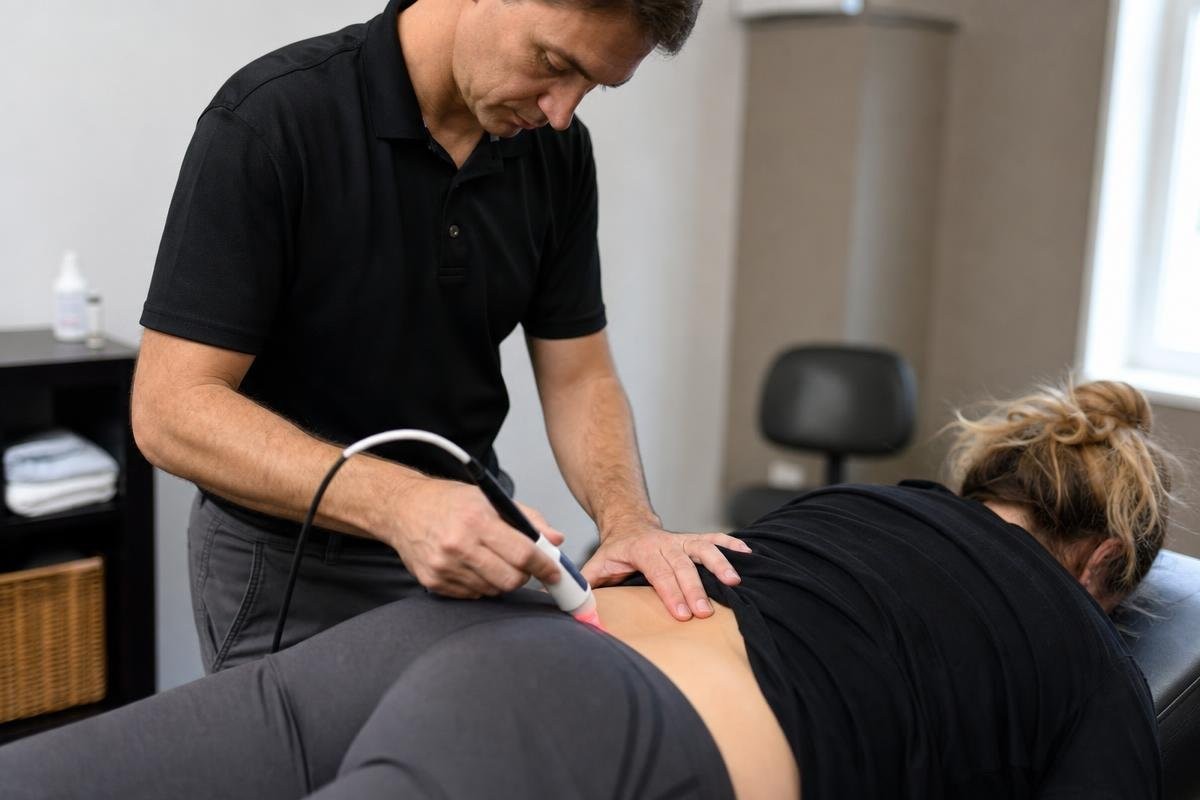
Low-level laser therapy uses light wavelengths to penetrate tissue and stimulate the body's own repair process. No incisions. No heat damage. Just targeted light energy working to reduce pain and speed healing.
Photobiomodulation - The Science Behind the Light
The technical term for what happens is photobiomodulation. Light wavelengths in the 600 to 1000 nanometer range are absorbed directly by your mitochondria, the energy-producing structures inside each cell. That absorption triggers a chain reaction your body uses to heal itself.
Here is what the light energy sets in motion:
- Increased ATP production, giving cells more energy to repair
- Reduced inflammatory cytokines, which lowers swelling and pain signals
- Stimulated collagen synthesis for tissue rebuilding
- Improved local circulation, bringing oxygen and nutrients to damaged tissue
We use MLS laser therapy, which stands for Multiwave Locked System. MLS technology delivers two synchronized wavelengths at the same time. That simultaneous delivery reaches deeper tissue layers and produces faster results than older single-wavelength devices. Our laser therapy team uses this technology to address conditions ranging from back pain and sciatica to sports injuries and chronic inflammation.
Cold vs. Hot Lasers, and Why We Chose MLS
The word "cold" refers to power output, not temperature. Surgical lasers operate at high wattage and generate enough heat to cut or cauterize tissue. Cold lasers operate at milliwatts to a few watts, well below the threshold that would damage skin or underlying tissue.
There is a further distinction worth knowing. Class III lasers deliver less than 500 milliwatts and work primarily at surface depth, which suits minor soft-tissue complaints. Class IV lasers deliver higher output for deeper penetration. MLS sits in a class of its own because it pairs a continuous-emission wavelength that targets inflammation with a pulsed wavelength that targets pain, delivered in sync. We chose MLS over a single-emission Class IV unit specifically because that dual-wavelength approach reaches deep lumbar and joint tissue while keeping thermal load low, so patients get depth without the warmth or caution required by high-power single lasers.
Most patients feel mild warmth during a session. Many feel nothing at all. There is no burning, no discomfort, and no recovery time needed afterward. If you have been managing ongoing pain, this approach pairs well with chiropractic rehabilitation to address the root cause rather than just the symptoms.
What Conditions Does Cold Laser Therapy Treat?
Laser treatment addresses a wide range of pain conditions, from acute soft-tissue injuries to long-standing nerve damage. Whether you strained your back on a weekend run or you've been managing chronic pain for years, this treatment accelerates tissue regeneration without drugs or surgery. The conditions we see respond well in our exam room every week may surprise you.
Musculoskeletal Pain and Injuries
Cold laser therapy is most commonly used for soft-tissue injuries and joint pain. If you commute along the King Street corridor or sit at a desk in Old Town, you likely know this kind of pain firsthand. Laser therapy for back pain and neck strain is one of the most frequent reasons patients come to see us.
Conditions we treat regularly include:
- Lower back pain
- Neck pain and cervical strain
- Sciatica
- Herniated disc
- Whiplash and auto accident injuries
- Sports injuries
- Plantar fasciitis
- Knee pain and IT band syndrome
Patients dealing with whiplash or collision injuries often pair this treatment with our car accident and personal injury chiropractic care for faster recovery. Runners and cyclists with overuse injuries frequently add it to a chiropractic rehabilitation plan.
Nerve Damage and Neuropathy
Low-level laser therapy does more than treat muscle pain. It also helps with nerve damage. The laser wavelengths stimulate Schwann cell activity, which supports nerve regeneration. They also reduce oxidative stress along damaged nerve pathways. For patients with peripheral neuropathy, this means less burning, tingling, and numbness over time.
The anti-inflammatory effects reduce nerve compression and limit the microvascular damage that worsens neuropathy symptoms. Because results build gradually with consistent sessions, many patients notice their symptoms easing over the course of a treatment plan rather than all at once. If you are unsure whether your symptoms point to nerve involvement, take our neuropathy quiz to get a clearer picture before your first visit.
Chronic Conditions and Inflammation
Many patients come to us after years of managing conditions like osteoarthritis, rheumatoid arthritis, fibromyalgia, and chronic tendinopathies. This treatment reduces prostaglandin synthesis, one of the key drivers of persistent inflammation. It also promotes lymphatic drainage, helping the body clear inflammatory waste without medication.
These are not quick fixes. But with consistent treatment, many patients report meaningful reductions in daily pain and stiffness. Our chronic pain chiropractic care team builds a plan around your specific condition and history.
Simply put, if pain is limiting your daily life, this may be the answer you have been looking for.
What Are the Real Benefits of Cold Laser Therapy?
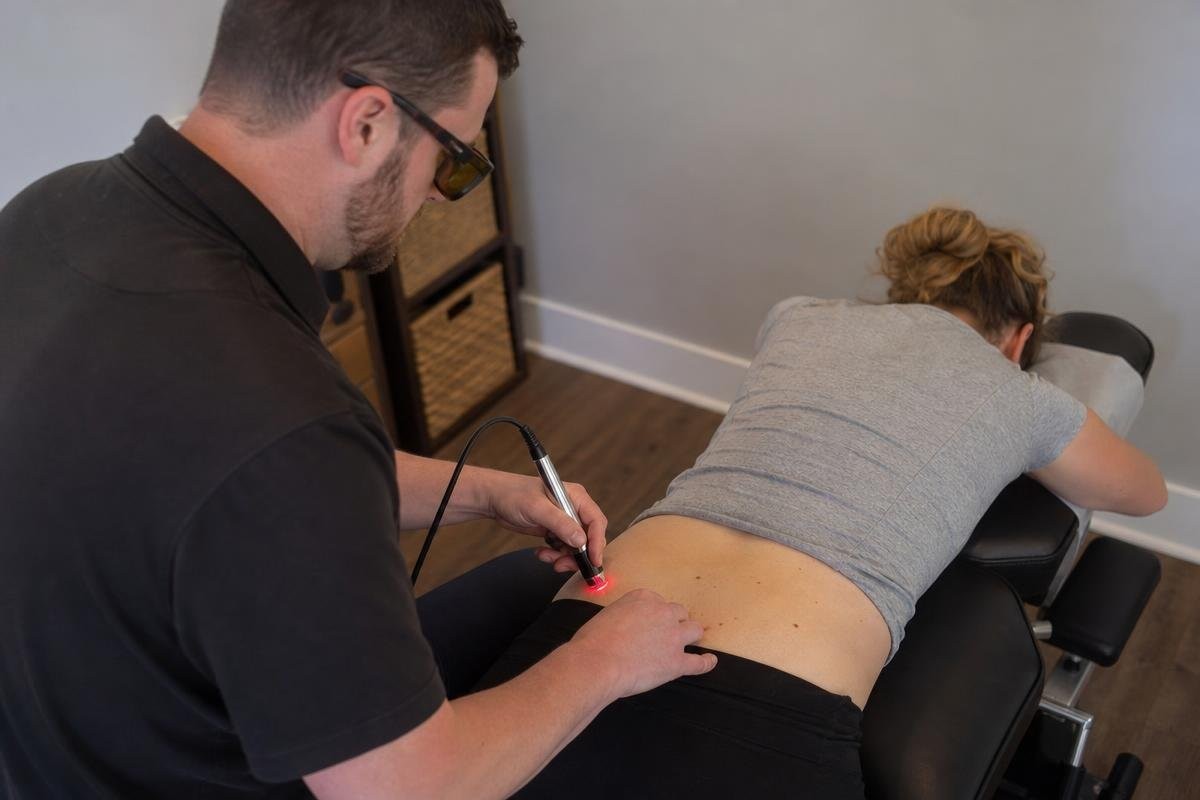
Cold laser therapy delivers measurable pain relief by targeting the biological source of pain, not just masking symptoms. It reduces substance P, the neuropeptide responsible for pain signaling, while increasing the body's natural endorphin release. The result is long-lasting relief without NSAIDs, opioids, or invasive procedures.
Pain Relief Without Drugs or Surgery
This is one of the strongest cases for photobiomodulation therapy as a non-surgical pain relief option. We pair it with chiropractic adjustments and chiropractic rehabilitation to address the root cause of your pain, not just the surface symptoms. That combination matters. You get structural correction and cellular-level healing working together.
This treatment benefits patients who have tried medication without lasting results. It is also a strong option for anyone who wants to avoid surgery entirely or reduce dependence on pain relievers.
Faster Recovery and Tissue Repair
The laser stimulates ATP production inside damaged cells. More ATP means faster fibroblast activity, which drives collagen remodeling in tendons, ligaments, and muscle tissue. For patients recovering from work injuries or sports overuse injuries, that accelerated repair time makes a real difference.
For stubborn soft-tissue injuries that are slow to respond, shockwave therapy can be used alongside laser treatment as a complementary solution. Our team builds individualized care plans based on what your tissue actually needs.
Safe for Patients of All Ages
This treatment is non-invasive, painless, and uses no ionizing radiation. It is appropriate for patients of all ages, from older adults in Seminary Hill managing arthritis to younger athletes recovering from overuse injuries like IT band syndrome or knee pain.
Side effects are rare and mild. We do not apply the laser directly over malignant tumors, the eyes, or the thyroid gland, and we do not treat over the abdomen during pregnancy. That transparency is part of how we deliver individualized care you can trust.
Simply put, we want you to feel better.
Is Cold Laser Therapy Right for You?
This treatment works best for patients with acute or chronic soft-tissue injuries, joint pain, or nerve conditions who want a non-surgical solution. It is not the right fit for every patient, and our team will tell you that honestly before we start any treatment plan.
Good Candidates for Laser Therapy
Most patients who respond well share a few common traits. They have pain that has not resolved with rest alone, or they want to avoid medications and surgery. If you are dealing with any of the following, laser therapy may be a strong option:
- Chronic back or neck pain not resolved by rest alone
- Post-surgical recovery and tissue healing
- Neuropathy symptoms such as burning, tingling, or numbness
- Arthritis-related joint inflammation
- Sports or work-related soft-tissue injuries
- Sensitivity or intolerance to anti-inflammatory medications
Patients traveling from Falls Church and Woodbridge make up a meaningful part of our Northern Virginia patient base, many seeking specialized laser care not available closer to home. If you are unsure whether neuropathy is part of your condition, our neuropathy treatment page explains the signs in plain terms. Laser treatment is not appropriate for everyone. Patients with active cancer in the treatment area, those with a pacemaker, and anyone with open wounds at the treatment site should consult a physician before proceeding. We screen for these factors before any session begins.
When to Combine Laser Therapy With Other Treatments
Cold laser therapy is rarely used as a standalone treatment at our clinic. Because it works at the cellular level, it makes a strong complement to manual therapies that address structure and alignment at the same time.
Common pairings we use include:
- Laser plus chiropractic adjustments for spinal pain with inflammation
- Laser plus dry needling for myofascial and trigger-point pain
- Laser plus cupping therapy for circulation and soft-tissue recovery
- Laser plus spinal decompression for herniated disc patients
Every plan is built around your specific diagnosis. We do not use a one-size-fits-all protocol. If you are already receiving chiropractic rehabilitation, adding laser therapy to your existing plan is often a natural next step.
What to Expect During a Cold Laser Therapy Session
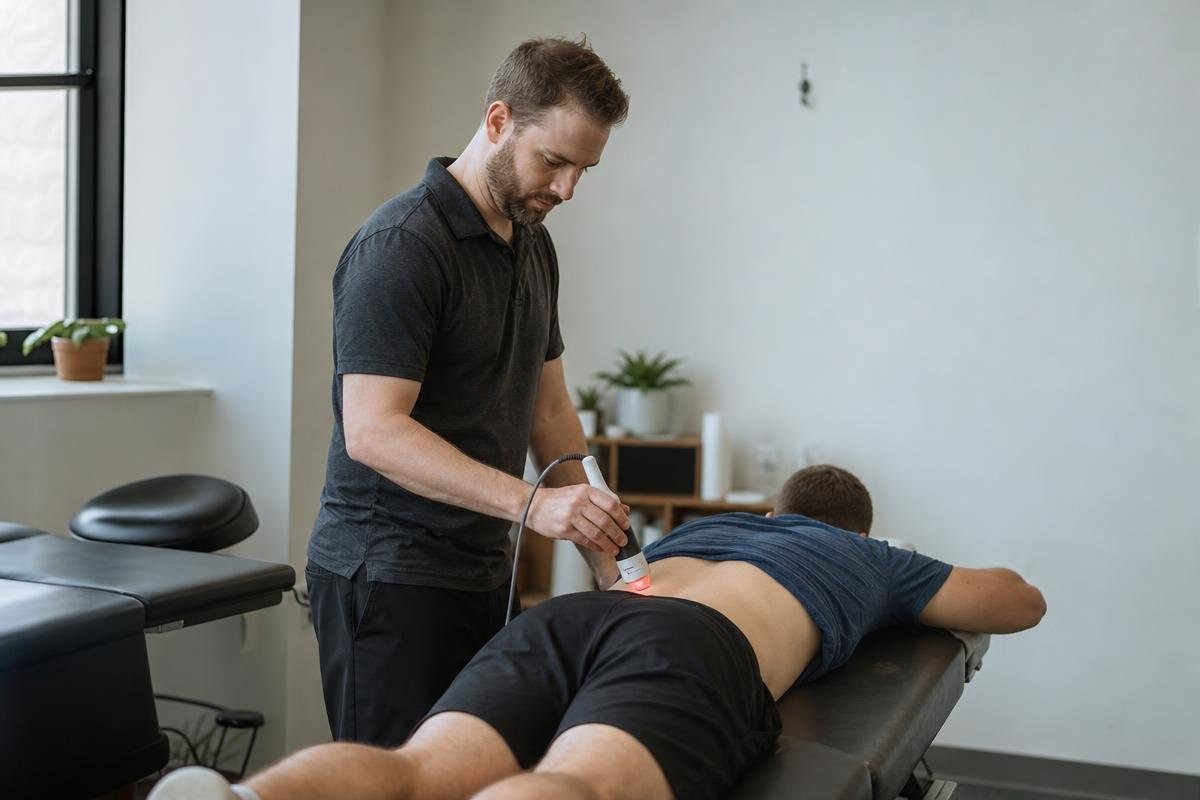
Many patients come in not knowing what a session actually feels like. That uncertainty is normal. Here is exactly what happens, step by step, so you can walk in prepared.
Before Your First Treatment
Before we start, our team reviews your health history and the specific area causing pain. Wavelength, power density, and treatment duration are all set based on your condition. There is no generic setting. We also screen for contraindications, including medications that increase photosensitivity, active cancer history, and pacemaker use.
No special preparation is required on your end. You do not need to fast, change your diet, or stop any routine activity before arriving.
During and After the Session
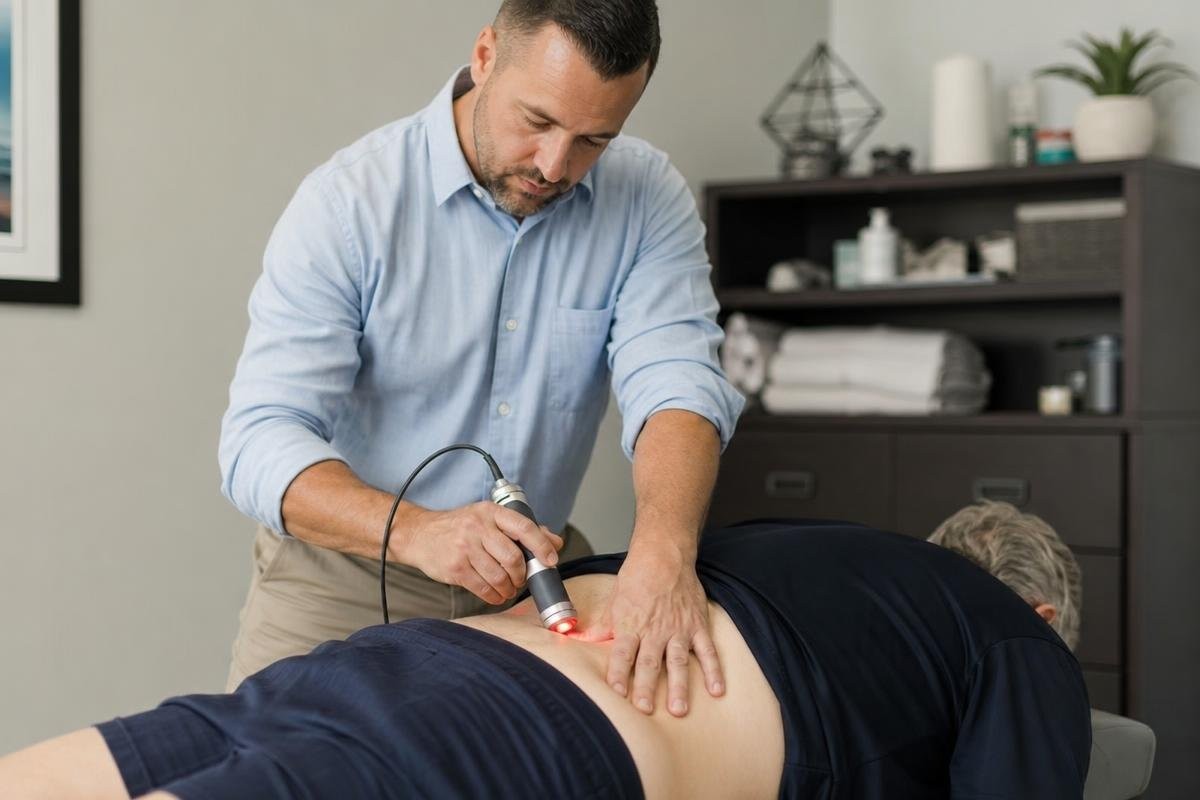
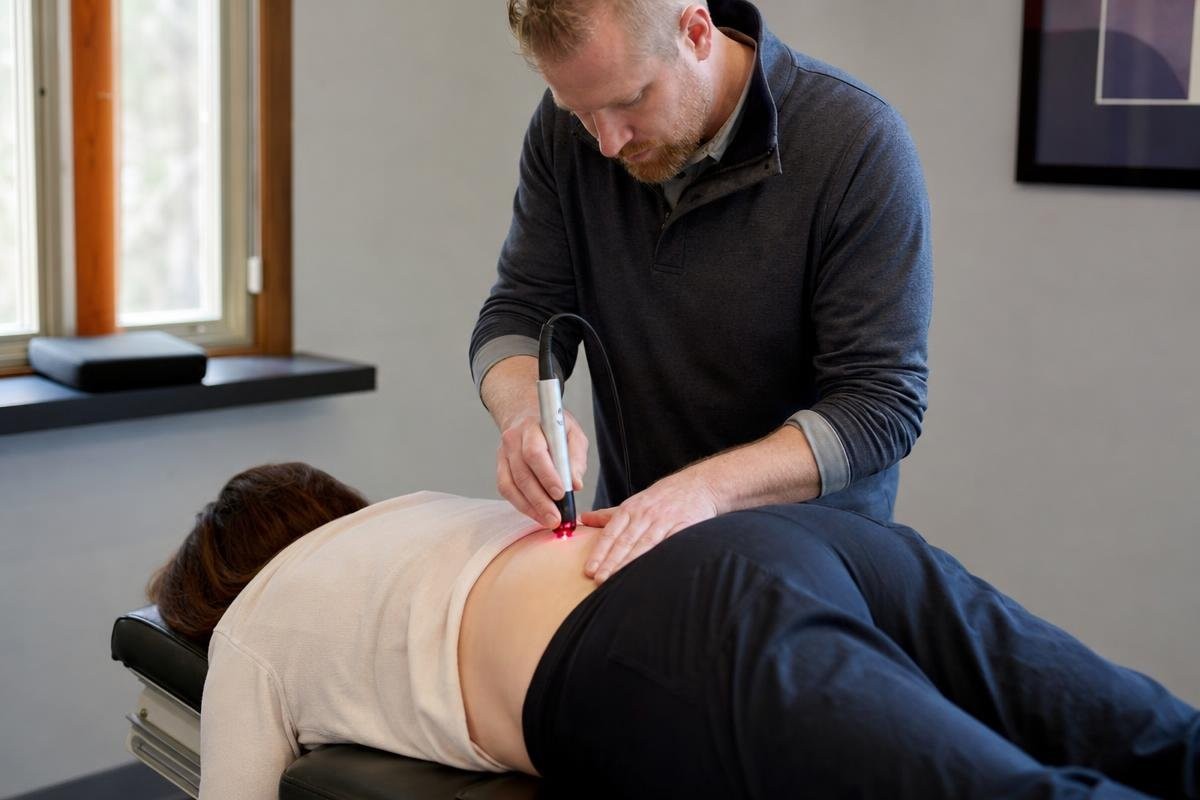
A typical MLS laser therapy session runs 5 to 20 minutes, depending on the size of the treatment area. The handheld device moves slowly over your skin. Most patients feel mild warmth or a gentle tingling sensation. It is painless.
- No needles, no incisions, no downtime
- You return to normal activity immediately after
- Sessions fit easily into a lunch break or after-work visit
- Acute injuries often respond within 3 to 4 treatments
- Most patients see meaningful improvement after 6 to 12 sessions
Results are cumulative. The laser drives tissue repair, and that process builds over time. Some patients combine laser treatment with chiropractic rehabilitation for faster recovery, particularly those managing disc injuries or post-injury strain. If you are dealing with ongoing pain, our chronic pain chiropractor team can build a treatment plan around your schedule and goals.
Cold Laser Therapy for Alexandria, VA Patients - Local Conditions That Make It Relevant
Living in Northern Virginia means your body takes a specific kind of beating. The daily grind of the Eisenhower Avenue corridor and the King Street Metro adds up fast. This treatment addresses the exact pain patterns we see most often in patients from this area.
A Sedentary Commuter Culture and Its Toll on the Spine
If you commute through the Pentagon City corridor or work in one of the office parks near the West End, you may spend 60 to 90 minutes a day seated before you even reach your desk. That kind of sustained compression loads the lumbar facet joints and tightens the hip flexors over months and years. Service and hospitality workers around the Old Town waterfront carry the same postural strain from long shifts on their feet or hunched over screens.
Low-level laser therapy calms those chronically inflamed paraspinal muscles and spinal joints without pharmaceuticals. We often pair it with chiropractic adjustments to correct the underlying postural mechanics driving your pain. If you deal with persistent lower back or neck pain from desk posture, our chronic pain chiropractor team can build a plan around your schedule.
Active Residents, Sports Injuries, and Faster Recovery
The Potomac waterfront draws runners and cyclists year-round. IT band syndrome, plantar fasciitis, and soft-tissue strains from recreational sports leagues are common reasons patients from Del Ray, Rosemont, and Landmark come through our door. Laser treatment accelerates tissue repair so you return to activity faster, without relying on NSAIDs.
We also see patients traveling from Springfield, Annandale, Falls Church, Manassas, and Woodbridge for non-surgical pain relief in Northern Virginia. Our office at 50 S Pickett St STE 114, Alexandria, VA 22304 serves the full Northern Virginia region. Patients consistently describe our care as attentive and thorough. Learn more about chiropractic rehabilitation options we offer alongside laser therapy for back pain and sports recovery.
Frequently Asked Questions
How many sessions will I need?
It depends on your diagnosis. Acute injuries typically respond well in 3 to 6 sessions. Chronic conditions, such as arthritis, herniated discs, or long-standing back pain, generally require 8 to 12 sessions for sustained relief. Our team builds a treatment timeline around your specific case and adjusts based on how you respond after the first few visits.
Does cold laser therapy hurt?
No. The vast majority of patients feel nothing more than mild warmth or a gentle tingling during treatment. There is no tissue damage, no heat buildup, and no recovery period. You can return to your normal routine immediately after each session.
How much does cold laser therapy cost in Northern Virginia?
Cost varies depending on the number of sessions and whether laser therapy is part of a broader treatment plan. We provide a clear price before any treatment begins. To get specific information, contact our office at 50 S Pickett St STE 114, Alexandria, VA 22304 and we will walk you through your options.
Can I use a home cold laser device instead?
Consumer devices operate at significantly lower power than clinical-grade equipment. They may offer mild, temporary relief for surface soreness. For conditions like neuropathy, herniated discs, or arthritis, they cannot replicate the tissue-penetrating depth or calibrated wavelength combinations of professional systems. Clinical treatment is the appropriate choice for those diagnoses.
Is cold laser therapy the same as MLS laser therapy?
Cold lasers are the broad category. MLS is a specific patented technology within it. MLS uses two synchronized wavelengths at once, one targeting inflammation and one targeting pain, which produces faster and more consistent results than single-wavelength devices. You can read more on our laser therapy chiropractor page.
What is the difference between cold laser therapy and shockwave therapy?
Cold laser uses light energy to stimulate cellular repair, making it well suited for nerve conditions, inflammation, and chronic pain. Shockwave therapy uses acoustic pressure waves to break down calcified tissue and drive healing in tendons and ligaments. Both are non-surgical and require no medication. The right choice depends on your specific condition, and we often use both within the same treatment plan.
Can cold laser therapy help with neuropathy?
Yes. Low-level laser therapy promotes nerve regeneration by reducing oxidative stress and stimulating the cells responsible for nerve repair. It is one of the more effective non-pharmaceutical approaches for patients dealing with numbness, burning, or tingling in the hands and feet. If you are unsure whether neuropathy is contributing to your symptoms, take our neuropathy quiz as a starting point.
Ready to Get Started with Virginia Family Chiropractic & Physical Medicine?
Pain does not have to be your baseline. If you have been managing back pain, nerve symptoms, arthritis, or a soft-tissue injury without lasting relief, cold laser therapy may be the next step worth taking. Our team at 50 S Pickett St STE 114, Alexandria, VA 22304 is ready to review your history, explain your options, and build a plan around your specific diagnosis. Call our office or request an appointment online. We serve patients from across Northern Virginia, including Falls Church, Manassas, and Woodbridge. The first step is a conversation.